


Table of Contents
- Why Proper Oil Storage Matters for Daily Cooking
- Best Containers for Cooking Oil Storage
- Temperature and Location: Where to Keep Your Oil
- Light Exposure and Oil Degradation
- Signs of Rancid Cooking Oil and When to Discard
- Is an Oil Sprayer Worth It for Cooking
- Oil-Specific Storage Guidelines and Shelf Life
- Frequently Asked Questions
Last Updated: September 20, 2026
Why Proper Oil Storage Matters for Daily Cooking
Thermal oxidation of cooking oil generates free radicals, and dietary consumption of such oil is linked to deleterious health effects, according to National Center for Biotechnology Information research on cooking oil oxidation. This is why how you store cooking oil for daily use matters far more than most home cooks realize.
Rancid oil loses nutritional value and introduces harmful compounds into meals. Proper storage keeps your oil safe, flavorful, and ready to use.
The key factors are temperature, light, air exposure, and container choice.
Best Containers for Cooking Oil Storage
The right container directly impacts how long your oil stays fresh.
Glass vs. Metal: Which Material Works Best
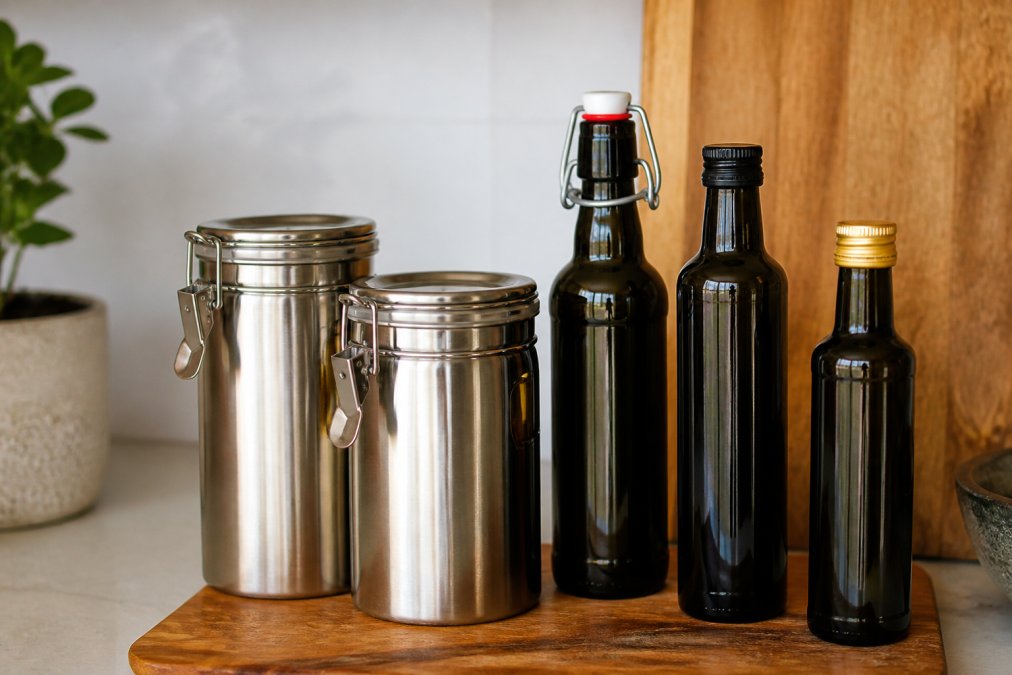
Dark glass containers are the gold standard. Glass won't leach chemicals, and dark or amber bottles block ultraviolet rays that accelerate oxidation.
Stainless steel containers are your second-best option. According to Restaurant Technologies guidance on used cooking oil storage, stainless steel provides increased durability and protection from light exposure, which helps maintain oil quality. Metal won't shatter if dropped, making it ideal for kitchens with kids or frequent travelers.
Avoid clear plastic or thin aluminum, plastic leaches compounds and clear containers expose oil to light. Here's the practical difference:
- Dark glass: Best for countertop storage; blocks light completely
- Stainless steel: Best for durability; resists dents and damage
- Clear glass: Acceptable only if stored in a dark cabinet
- Plastic: Not recommended for long-term storage
Sealing and Airtight Containers
An airtight seal is essential. Oxygen causes oxidation and rancidity; degradation accelerates the moment air enters.
Look for containers with tight-fitting lids that create a genuine seal. According to University of Georgia College of Agricultural and Environmental Sciences recommendations on oil storage, dark-colored bottles and stainless steel with proper sealing are recommended to block light and minimize oxidation.
Test your seal by flipping the container upside down over a sink. If oil drips, replace the lid or switch containers.
Temperature and Location: Where to Keep Your Oil
Temperature control is critical. Heat accelerates oxidation, and the ideal storage location depends on your climate and kitchen conditions.
Pantry vs. Refrigerator Storage
Most cooking oils should be stored in a cool, dark pantry at room temperature (50-70°F). At this temperature, oxidation proceeds slowly and oil remains pourable.
Refrigeration is unnecessary for most oils and can cause cloudiness or solidification. However, if your kitchen consistently exceeds 75°F, refrigeration may extend shelf life by 20-30%, though you'll need 30-45 minutes for the oil to reach room temperature before cooking.
When to refrigerate:
- Your kitchen temperature regularly exceeds 75°F
- You live in a hot climate and don't have air conditioning
- You're storing delicate oils (walnut, flax, sesame) that oxidize quickly at room temperature
- You've opened a bottle and won't use it within 4-6 weeks
When pantry storage is sufficient:
- Your kitchen stays between 60-72°F year-round
- You use oil regularly (at least weekly)
- You're storing stable refined oils (canola, vegetable, soybean)
Managing Temperature Fluctuations
Temperature swings damage oil faster than steady warmth. Each swing causes expansion and contraction, allowing air to enter and accelerate oxidation.
This is especially problematic in kitchens with poor insulation, homes without air conditioning, garages with seasonal swings, and cabinets near heat-generating appliances.
Climate-Specific Storage Solutions
High-heat environments (above 80°F regularly):
Oil oxidizes 2-3 times faster at 80°F than at 70°F. Options: refrigerate bulk storage, store in the coolest room, buy smaller quantities and replace frequently, or switch to more stable oils like refined avocado or coconut.
High-humidity environments:
KitchenMaster 16oz Dual-Function Olive →
Locations to Avoid
Never store oil above or next to the stove, near windows, in cabinets above the oven, on open countertops, in uninsulated garages, near dishwashers or washing machines, or in cars.
The Best Location for Your Kitchen
The ideal spot is a dark cabinet in a cool corner of your kitchen, away from appliances, windows, and heat sources. If your kitchen doesn't have such a location, prioritize darkness and temperature stability over convenience. A slightly inconvenient storage spot that keeps oil fresh is better than easy access to degraded oil.
Light Exposure and Oil Degradation
Ultraviolet rays trigger oxidation. Dark bottles are essential; clear glass offers zero protection. If you use a clear container, keep it in a dark cabinet. Olive oil is especially light-sensitive. The rule: no light exposure.

Signs of Rancid Cooking Oil and When to Discard
Rancid oil isn't just unpleasant to taste. It can introduce harmful compounds into your food. Learn to spot the warning signs.
Visual signs:
- Dark coloration or cloudiness (beyond normal sediment)
- Visible particles or debris that won't settle
Smell and taste:
- Musty, stale, or off-putting odor
- Bitter, soapy, or burnt flavor when tasted
Is an Oil Sprayer Worth It for Cooking
Daily-use oil dispensers, whether spray bottles, cruets, or pour spouts, offer convenience but introduce hygiene and quality risks that bulk storage avoids. Understanding these trade-offs helps you choose the right tool for your kitchen.
Dispenser Types and Their Safety Trade-Offs
Spray bottles deliver precise misting and portion control, using roughly 0.15g per spray. They're excellent for salads and roasted vegetables. However, spray mechanisms can trap old oil residue inside the nozzle, which contaminates fresh oil when you refill. The internal pump also introduces air with each use, accelerating oxidation.
Cleaning and Cross-Contamination Prevention
The biggest hygiene risk with daily-use dispensers is old oil residue. When you refill a dispenser without thoroughly cleaning it, remnants of the previous oil mix with fresh oil. Old oil is partially oxidized; fresh oil accelerates the oxidation of old oil. This dramatically shortens the shelf life of your new batch.
Cleaning protocol for spray bottles:
- Empty completely and rinse with hot water
- Disassemble the pump and nozzle (most models allow this)
- Soak all parts in hot soapy water for 10 minutes
- Use a thin brush or pipe cleaner to clear the internal tube
- Rinse thoroughly and air-dry completely before refilling
For glass cruets and pour spouts:
- Rinse with hot water immediately after use
- Before refilling, wash with hot soapy water and a bottle brush
- Rinse multiple times to remove all soap residue (soap can affect oil flavor)
- Dry completely with a lint-free cloth or paper towel
- If the cruet has been sitting empty for more than a week, repeat the wash cycle
Light Exposure in Countertop Dispensers
If your dispenser sits on the counter, light exposure is constant. Clear glass dispensers degrade oil 3-5 times faster than dark glass or opaque containers stored in a cabinet, based on typical kitchen lighting conditions.
If you prefer a countertop dispenser for convenience:
- Choose dark glass or opaque stainless steel only
- Position it away from direct sunlight and overhead kitchen lights
- Consider storing it in a cabinet between uses if you cook infrequently
- Refill more often (every 2-3 weeks instead of monthly) to minimize oxidation time
The Practical Trade-Off
A countertop dispenser is worth using if you cook daily and prioritize convenience over maximum shelf life. The trade-off is accepting a slightly shorter window of freshness (typically 3-4 weeks instead of 2-3 months for bulk storage). To minimize risk:
- Use a dark glass bottle with a tight-fitting pour spout, not a clear cruet
- Clean thoroughly before each refill
- Keep the dispenser away from heat sources and direct light
- Refill more frequently with smaller quantities
- Reserve decorative clear-glass cruets for vinegars or infused oils, not everyday cooking oils
Oil-Specific Storage Guidelines and Shelf Life
Different oils have different lifespans. Storage conditions affect all of them, but some are more stable than others.
Frequently Asked Questions
How long can you store cooking oil for daily use?
Shelf life depends on the oil type and storage conditions. Most oils last 1-2 years when stored properly in a cool, dark place. Refined oils are more shelf-stable than cold-pressed varieties. Heat, light, and oxygen accelerate degradation, so using an airtight container and keeping oil away from direct sunlight extends usability. Check for signs of rancidity, off odors, dark discoloration, or excessive smoke, before each use.
What are the signs of rancid cooking oil?
Rancid oil develops a stale, musty, or unpleasant odor, often described as cardboard-like. The oil may appear darker or cloudier than when fresh. It may smoke excessively at lower temperatures than its normal smoke point. Free fatty acids and peroxide values increase as oil oxidizes, creating these sensory changes. Discard oil immediately if you notice any of these signs, as rancidity indicates thermal degradation and increased free radicals linked to health concerns.
Is an oil sprayer worth it for cooking?
Oil sprayers offer precise portion control and even coverage. They dispense measured amounts, around 0.15g per spray, helping you manage daily oil intake while keeping your kitchen organized. A dual-function sprayer and pourer gives flexibility for different cooking tasks. If you cook frequently and want to reduce oil waste while maintaining accuracy, a quality glass dispenser is a practical investment. The KitchenMaster 16oz Dual-Function Olive Oil Sprayer delivers both spray and pour functions, making it ideal for daily kitchen use.
Should I store cooking oil in the refrigerator or pantry?
Most refined cooking oils are best stored in a cool, dark pantry away from heat sources and direct sunlight. Refrigeration causes some oils to solidify or become cloudy, affecting usability. However, unrefined and cold-pressed oils benefit from cooler storage. Check your specific oil's label for guidance. Regardless of location, keep oil away from the stove, oven, and windows. Consistent, cool temperatures preserve oil quality better than temperature fluctuations.


