


Table of Contents
- How to Measure a Dog for a Collar
- How Tight Should a Dog Collar Be
- Dog Collar Materials and Types for Everyday Wear
- Choosing the Right Collar Width and Strength for Your Dog
- Can Dogs Wear Collars All the Time
- Safety Checks and Preventing Collar-Related Injury
- Collar Care and When to Replace
- Common Mistakes to Avoid When Selecting a Dog Collar
- Frequently Asked Questions
Last Updated: October 12, 2026
How to Measure a Dog for a Collar
Learning how to pick the best dog collar for daily use starts with getting your dog's measurements correct. A collar that doesn't fit won't stay secure, and one that's too tight can hurt.
Use a soft measuring tape to get your dog's neck circumference. Wrap it snugly around the base of the neck where a collar would sit. Write down the measurement in centimeters.
Measure your dog when they're standing still and calm. Take the measurement at least twice to confirm accuracy.
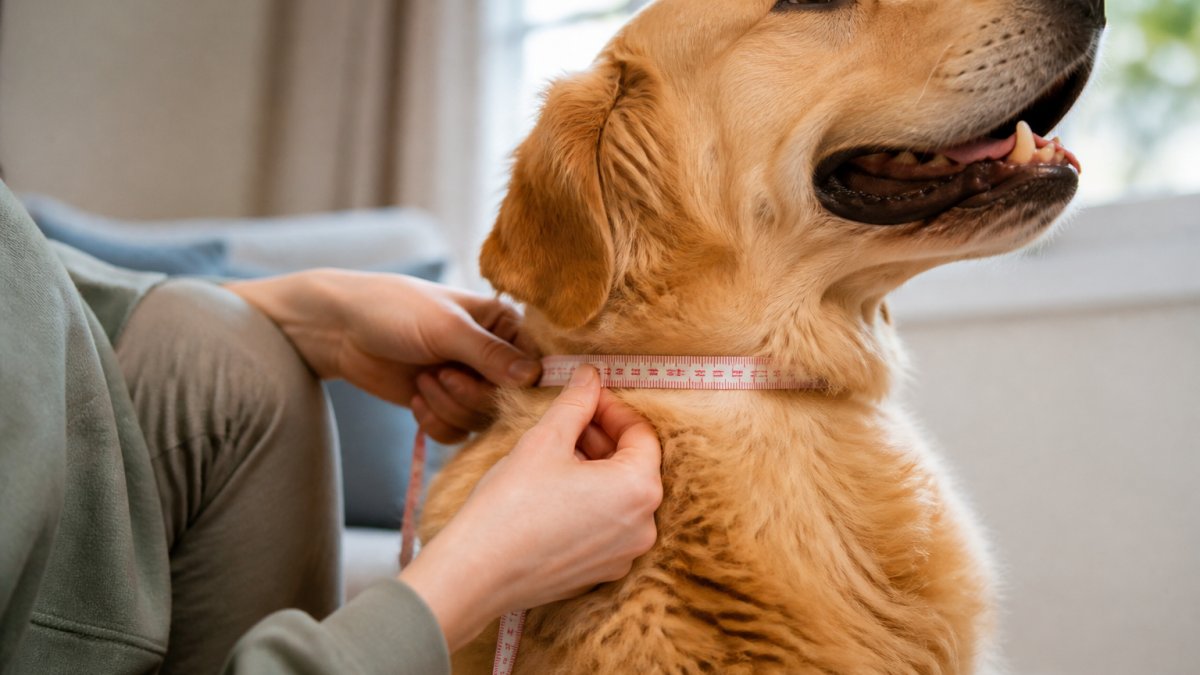
Most collars come in standard sizes. Small collars typically fit neck sizes from 25-32 cm. Medium collars work for 32-40 cm.
Write down your dog's neck size and keep it handy when shopping. You'll use this number when evaluating different collar types and materials.
How Tight Should a Dog Collar Be
Your dog's collar should be snug but not tight. The standard rule is the two-finger fit rule: you should be able to slip two fingers comfortably between the collar and your dog's neck. This gives your dog room to breathe and move while keeping the collar secure.
Check the fit regularly, especially for growing puppies. Puppies grow quickly, and a collar that fit last month may be too tight now. Adult dogs can gain or lose weight, which also affects how a collar fits.
A collar that's too tight can cause discomfort, skin irritation, and even injury to the neck. A collar that's too loose can slip off or get caught on objects. The two-finger rule balances safety and security.
When you fasten your dog's collar, make sure the buckle or clip sits flat against the neck without twisting. If your dog wears the collar all day, check for any signs of rubbing or hair loss around the neck area. These are signs the collar needs adjustment or replacement.
Dog Collar Materials and Types for Everyday Wear
Choosing the right material and type matters for daily comfort and durability. Different materials offer different benefits, and collar types serve different purposes. Understanding your options helps you pick what works best for your dog's lifestyle.
Flat Collars
A flat collar is the most common everyday collar. It's a simple band of material with a buckle or clip to fasten. Flat collars work well for dogs that don't pull much and are used to wearing a collar. They're easy to put on and take off, and they're comfortable for all-day wear.
Flat collars come in many materials. Nylon is durable, affordable, and easy to clean. Leather is classic and often more comfortable for dogs with sensitive skin, though it requires more care. Cotton blends offer a softer feel and work well for dogs with allergies.
The width of a flat collar matters. Narrow collars (1.5-2 cm wide) suit small dogs and puppies. Wider collars (2.5-3 cm) distribute pressure better for larger dogs and provide more strength.
Martingale Collars
A Martingale collar has two loops: one that fits around the neck and one that tightens when the dog pulls. Unlike a choke collar, a Martingale tightens only to a set limit, so it can't cut off your dog's airflow. This makes it safer for training and everyday use.
Martingale collars work well for dogs that pull or dogs with narrow heads that can slip out of flat collars. They're also useful for dogs that pull during walks but don't need constant correction.
Research published in the journal indexed by PubMed Central found that non-tightening front-clip harnesses seem to offer a good balance between discomfort and preventing pulling, suggesting that for dogs that pull significantly, a harness may be worth considering alongside a Martingale option.
Clip Collars vs. Buckle Collars
Clip collars use a plastic or metal snap to fasten. They're quick to put on and take off, making them convenient for busy owners. Clip collars work well for dogs that don't pull hard and are comfortable for daily wear.
Buckle collars use a traditional buckle or strap system. They're more secure and often stronger than clip collars. Buckle collars are better for larger dogs or dogs that pull, since they distribute force more evenly.
Both types can work for everyday use. Choose based on your dog's size, strength, and your own preference. If you have a large or strong dog, a buckle collar may be more reliable. If convenience matters most, a clip collar is faster.
Choosing the Right Collar Width and Strength for Your Dog
Collar width and strength should match your dog's size and build. A narrow collar on a large dog won't distribute pressure evenly. A wide collar on a small dog can be uncomfortable and hard to fasten properly.
For small dogs under 10 kg, use collars 1.5-2 cm wide. For medium dogs from 10-25 kg, choose 2-2.5 cm width. For large dogs over 25 kg, go with 2.5-3 cm or wider. Extra-large dogs may need collars 3-4 cm wide for comfort and durability.
The material's strength matters too. Nylon webbing is strong and durable for everyday wear. Leather is strong but requires regular care. Cotton blends are softer but may not hold up as well for strong pullers.
Consider your dog's activity level. A dog that hikes, swims, or plays rough needs a durable, washable collar. A dog that takes short walks around the neighborhood can wear a lighter, more delicate collar.
Can Dogs Wear Collars All the Time
Many owners wonder if it's safe to leave a collar on a dog all day and night. The answer depends on the collar type, fit, and your dog's individual needs.
Flat collars can be worn all day for most dogs. They're designed for continuous wear and don't cause harm if they fit properly. However, check regularly for signs of rubbing, hair loss, or skin irritation.
Regatta Nautical Sailing Flag Buckle & Martingale Dog Collar →
Martingale collars should not be worn all the time. They're designed for training and walks, not continuous wear. Leaving a Martingale on all day increases the risk of the dog catching it on something and getting injured.
Some dogs develop skin sensitivity from constant collar wear. If your dog has sensitive skin or a thick coat, remove the collar for a few hours each day. This gives the skin underneath a chance to breathe and prevents irritation.
Puppies grow quickly. Check your puppy's collar daily to make sure it still fits properly. A collar that fit yesterday may be too tight today.
Safety Checks and Preventing Collar-Related Injury
Regular safety checks prevent injuries and keep your dog comfortable. Inspect your dog's collar weekly for signs of wear, damage, or looseness.
Look for fraying, cracking, or fading material. Check that all hardware (buckles, clips, D-rings) is secure and not bent or broken. Make sure the D-ring where you attach the leash is still firmly attached and not loose.
Check your dog's neck for signs of rubbing, hair loss, or skin redness. These are early warning signs that the collar is too tight, made of a material your dog is sensitive to, or being worn too long without breaks.
Keep ID tags and microchip information current. A collar is only useful if it helps someone identify and return your lost dog. Update tags whenever you move or change your phone number.
Never leave your dog unsupervised while wearing a collar indoors, especially if they're crated or in a confined space. Collars can catch on crate bars, furniture, or other objects and cause injury or strangulation.
Collar Care and When to Replace
Taking care of your dog's collar extends its life and keeps it safe. Wash nylon collars by hand with mild soap and water. Let them air dry completely before putting them back on your dog.
Leather collars need more care. Wipe them with a damp cloth and condition them regularly to prevent cracking. Avoid soaking leather collars or using harsh chemicals.
Replace your dog's collar when you notice significant wear. If the material is fraying, the buckle is broken, or the collar has lost its shape, it's time for a new one.
Check your dog's collar fit at least once a month. Adjust as needed to maintain the two-finger fit rule. For growing puppies, check weekly.
At Lesara's Odds & Ends, we carry everyday collars designed for comfort and durability. Our Adjustable Dog Collar & Leash Set features eco-friendly PVC material that's durable and easy to clean.
For dogs that appreciate style, our Regatta Nautical Sailing Flag Buckle & Martingale Dog Collar combines fashion with function.
Common Mistakes to Avoid When Selecting a Dog Collar
One common mistake is buying a collar without measuring your dog first. Guessing your dog's size often leads to a collar that doesn't fit well. Always measure before you buy.
Another mistake is choosing a collar based only on appearance.
Don't assume all collars are the same. Flat collars, Martingale collars, and clip collars serve different purposes.
Avoid leaving a collar on your dog without checking it regularly. Even a well-fitting collar can become too tight as your dog's coat grows or their weight changes. Regular checks prevent problems.
Never ignore signs of skin irritation or discomfort.
| Mistake | Why It Matters | Solution |
|---|---|---|
| No measurement before buying | Collar won't fit properly | Measure neck circumference first |
| Choosing by looks only | Wrong strength or material for your dog | Prioritize comfort and durability |
| Wrong collar type for your dog's needs | Safety and comfort issues | Match type to your dog's behavior |
| Never checking fit | Collar becomes too tight or loose | Check fit monthly, adjust as needed |
| Ignoring skin irritation signs | Can lead to injury or infection | Switch materials or remove collar regularly |
Understanding how to pick the best dog collar for daily use comes down to three things: accurate measurement, the right fit, and choosing a type that matches your dog's needs.
At Lesara's Odds & Ends, we understand that your dog's comfort matters. Our selection of everyday collars is designed to fit properly, last through daily use, and keep your dog safe.
Frequently Asked Questions
How do I measure my dog for a collar?
Measure around your dog's neck with a soft measuring tape, positioning it where the collar would normally sit, at the base of the neck. Keep the tape snug but not tight. Add one inch to this measurement to account for growth and comfort. Write down the measurement in inches and compare it to the sizing chart for your chosen collar. Measure your puppy every 2-3 months as they grow, and recheck adult dogs annually or if they gain or lose weight.
How tight should a dog collar be?
A dog collar should be snug enough that it won't slip over your dog's head, but loose enough to fit two fingers comfortably between the collar and your dog's neck. This two-finger rule ensures comfort and freedom of movement while preventing escape. Check the fit regularly, collars can loosen over time, and growing puppies need frequent adjustments. If you can't fit two fingers, the collar is too tight and may restrict breathing or cause skin irritation.
Can my dog wear a collar all the time?
Dogs can wear collars during the day for daily walks and outdoor activities, but many veterinarians recommend removing collars indoors to reduce pressure on the neck and allow the skin to breathe. Constant collar wear can cause hair loss, skin irritation, and discomfort, especially in dogs with sensitive skin or thick coats. If your dog wears a collar all day, inspect the neck area daily for redness or matting. For indoor time, consider removing the collar or switching to a lightweight, breathable option.
What collar material is best for daily wear?
Nylon and leather are the most durable materials for everyday collars. Nylon is lightweight, easy to clean, and affordable, ideal for active dogs. Leather is more durable and comfortable against the skin but requires regular maintenance. Cotton blends, like those in designer-print collars, offer style and breathability but may not be as durable for heavy pullers. Consider your dog's coat type and skin sensitivity when choosing: dogs with sensitive skin or thick coats benefit from softer, breathable materials that won't trap moisture.


