


Table of Contents
- Why Proper Pet Travel Gear Matters
- Dog Car Travel Safety Gear: Restraints and Barriers
- Comfort and Containment: Pet Travel Crate for Car
- Food, Water, and Hydration for the Road
- Pet Travel Checklist: What You'll Need
- Pet First Aid Kit for Travel: Emergency Readiness
- Heat, Ventilation, and Unattended-Car Safety
- Frequently Asked Questions
Last Updated: October 11, 2026
Why Proper Pet Travel Gear Matters
The right essential pet travel gear for road trips keeps your pet safe, comfortable, and secure during the entire journey. Without proper equipment, even short drives become stressful for both you and your animal.
Safety is paramount: unrestrained pets become projectiles in sudden stops, risking injury and distracting you. Comfort reduces stress, and containment prevents escape attempts at rest stops.
Dog Car Travel Safety Gear: Restraints and Barriers
Restraints are non-negotiable for dog car travel safety gear. An unrestrained dog in a moving vehicle faces the same risks as an unbelted human passenger. In a crash at just 30 mph, a 60-pound dog experiences forces equivalent to a 2,700-pound impact.
Understanding Crash-Test Standards and Safety Claims
Look for products tested to Center for Pet Safety (CPS) standards or equivalent third-party crash testing, which simulates 30 mph collisions and measures whether the restraint holds the pet in place and prevents injury.
Key metrics to check:
- Harness integrity: Does the harness remain intact after impact, or do straps tear or buckles fail?
- Pet movement: Does the pet stay in the intended position, or does it shift, rotate, or slide forward?
- Force distribution: Is impact force spread across the chest and back, or concentrated on the neck or shoulders?
Ask manufacturers for test reports or third-party certifications before purchasing, as many products lack independent verification.
Harnesses and Seat-Belt Attachments
A crash-tested harness designed for vehicles is your best option for most dogs. These attach to your car's seat-belt system and distribute force across the chest and back rather than the neck.
Vehicle harnesses undergo impact testing to ensure they hold during sudden deceleration, unlike standard walking harnesses. Your dog should be able to sit, stand, and lie down comfortably while restrained.
Harness selection criteria:
- Fit: Measure your dog's chest and neck according to the manufacturer's sizing guide. A harness that is too loose will allow forward movement in a crash; too tight restricts breathing and comfort.
- Attachment points: Verify that the harness connects to your vehicle's seat-belt system at two or more points for stability.
- Material: Look for reinforced nylon or polyester webbing with metal buckles or D-rings rated for vehicle use.
- Adjustability: Straps should adjust independently so you can customize fit without over-tightening.
Seat-belt attachments connect your dog's collar or harness to the seat-belt buckle. They're simpler to install but offer less protection in high-impact situations.
Travel Crates and Carriers
A well-secured travel crate creates a contained space that protects your dog during sudden stops or collisions. Choose a crate large enough for your dog to stand and turn around, but snug enough to minimize movement during acceleration or braking.
Crate selection and placement:
- Hard-sided crates offer better protection than soft-sided carriers. They resist crushing and provide structural support. Look for crates with reinforced corners and impact-resistant plastic or metal construction.
- Positioning: Place the crate in the rear cargo area or secured to the back seat, never in the front. A rear-facing setup provides additional protection, similar to how rear-facing car seats protect infants. Use tie-down straps or cargo nets to prevent the crate from shifting during sudden stops or turns.
- Ventilation: Ensure the crate allows adequate airflow and does not trap heat, especially on warm days.
Securing the crate properly is as important as the crate itself. Use heavy-duty tie-down straps anchored to vehicle frame points or seat-belt systems, not placed loosely in the cargo area.
Comfort and Containment: Pet Travel Crate for Car
A pet travel crate for car journeys provides a familiar space where your dog feels secure. A crate reduces visual stimulation and creates a den-like environment that naturally calms most animals.
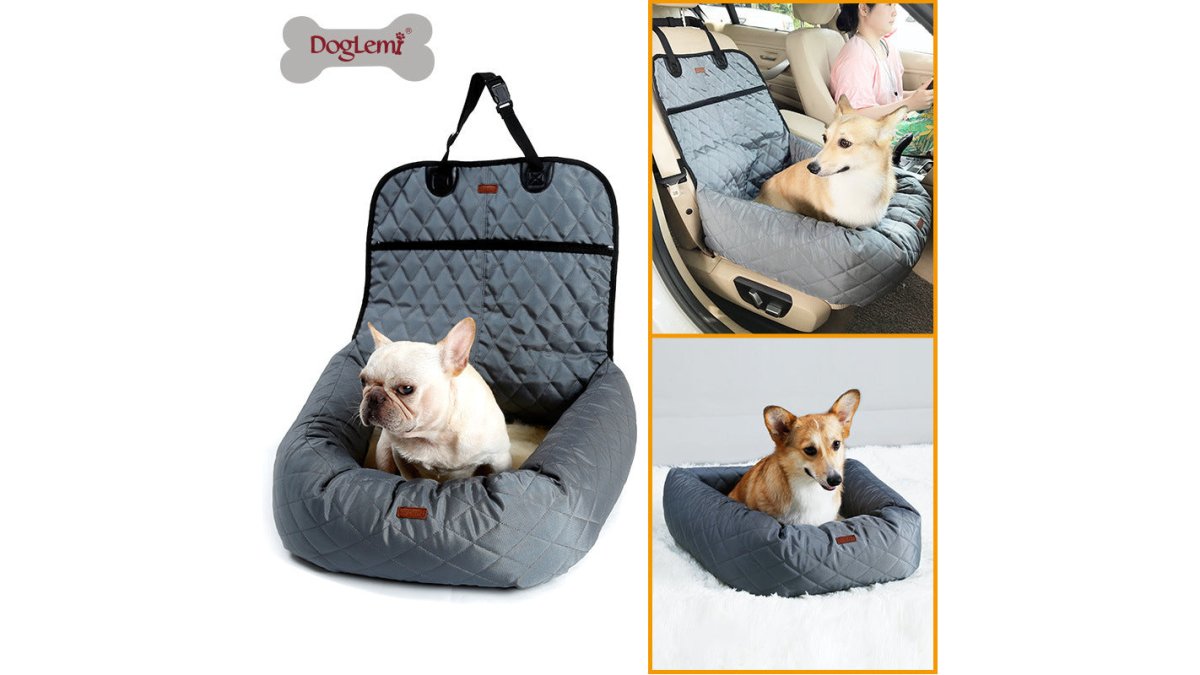
The Multifunctional Pet Bed with Thick Cushion from Lesara's Odds & Ends transforms a basic crate into a comfortable retreat.

A comfortable crate setup means your pet arrives less stressed and more ready to enjoy the trip.
Food, Water, and Hydration for the Road
Dehydration happens quickly during travel, especially in warm weather. Motion and stress increase water loss through panting, making hydration critical.
Pack bottled water from home, as unfamiliar water sources sometimes upset sensitive stomachs. Collapsible travel bowls take minimal space and prevent spills.
Feed your pet lightly before travel and avoid feeding during the drive. Pack familiar snacks and treats, not new foods that might cause digestive upset.
The Non-Slip Dual-Use Stainless Steel Pet Bowl from Lesara's Odds & Ends works for both food and water. Stainless steel resists odor absorption and cleans easily.
Pet Travel Checklist: What You'll Need
Proper preparation prevents problems on the road. Use this checklist to ensure you have all essential pet travel gear for road trips covered before you leave home.
| Item Category | What to Pack | Why It Matters |
|---|---|---|
| Safety & Restraint | Harness, crate, or seat-belt attachment | Prevents injury during sudden stops |
| Comfort | Bed, blanket, familiar toys | Reduces stress and anxiety |
| Food & Water | Bowls, bottled water, regular food, treats | Maintains hydration and nutrition |
| Identification | Tags, microchip info, recent photo | Enables recovery if pet escapes |
| Cleanup | Waste bags, pet wipes, paper towels | Manages accidents and rest stops |
| Health | First aid kit, medications, vet records | Prepares for emergencies |
| Leash & Collar | Reflective leash, collar with ID | Controls pet during stops |
Identification and Leash Gear
Your pet should wear a collar with an ID tag displaying your current phone number. Update microchip information with your current contact details before travel and take a recent photo in case your pet escapes.
The Reflective Pet Leash for Enhanced Safety from Lesara's Odds & Ends combines visibility with durability. Available for dogs under 10kg, 20kg, or 30kg, this automatic traction rope features fluorescent coloring, reflective nylon, and a non-slip handle for secure control at rest stops.
Cleanup and Waste Management
Pack waste bags, pet wipes, paper towels, plastic bags, and hand sanitizer for quick cleanups at rest stops.
Comfort Items and Familiar Belongings
Pack a blanket or bed that smells like home to reduce anxiety. Include favorite toys, though avoid toys that create mess or distraction.
New Multifunctional Pet Car Bed with Thick Cushion →
The Detachable Easy-Clean Pet Travel Mat from Lesara's Odds & Ends serves as both comfort item and protective barrier. Designed for pets under 25 pounds, this removable and machine-washable mat has stain-resistant fabric ideal for extended travel.
Pet First Aid Kit for Travel: Emergency Readiness
A basic first aid kit should include bandages, antiseptic wipes, tweezers, your pet's regular medications, and antihistamine tablets for allergic reactions.
Building Your Travel First Aid Kit
Essential supplies:
- Sterile gauze pads and adhesive bandages
- Antiseptic wipes or hydrogen peroxide (for wound cleaning)
- Antibiotic ointment
- Tweezers (for splinter or tick removal)
- Nail clippers or file
- Thermometer (rectal, for pets)
- Elastic bandages for sprains
- Saline solution (for eye flushing)
- Cotton balls or swabs
- Disposable gloves
- Pain reliever approved by your veterinarian
- Antihistamine (consult your vet on appropriate type and dosage for your pet's weight)
Store supplies in a waterproof, clearly labeled container that is easy to access but protected from extreme heat or cold.
Managing Motion Sickness and Travel Anxiety
Motion sickness symptoms include drooling, whining, vomiting, or excessive panting.
Prevention strategies:
- Medication: Motion sickness medication prescribed by your veterinarian can prevent vomiting. Discuss your trip length and your pet's history before departure.
- Feeding timing: Avoid feeding your pet 2-3 hours before travel, as a full stomach combined with motion increases nausea risk.
Medications and Medical Records
Pack your pet's regular medications in original bottles with clear labels. Include your veterinarian's contact information, medical records, vaccination history, and known allergies or health conditions.
What to bring:
- Current medication bottles with dosing instructions
- Prescription labels showing your pet's name and dosage
- Vaccination records (especially rabies certificate)
- Recent bloodwork or health screening results if your pet is senior or has chronic conditions
- Allergy list (food, environmental, medication)
- Microchip number and registration information
- Insurance information if you carry pet health insurance
Emergency Planning and Locating Care En Route
Before you leave, research veterinary emergency clinics along your route and at your destination.
Pre-trip preparation:
- Identify 24-hour emergency veterinary hospitals along your route using the American Animal Hospital Association (AAHA) directory or online search.
- If your pet has a chronic condition, ask your veterinarian for a referral to a specialist or emergency clinic in your destination area.
- Confirm your pet's microchip is registered with current contact information.
- Take a recent photo of your pet showing distinctive markings.
During your trip:
- If your pet shows signs of distress, difficulty breathing, uncontrolled vomiting, lethargy, or unusual behavior, head to the nearest emergency clinic immediately.
- Keep emergency clinic information easily accessible.
- If your pet runs out of medication, contact a local veterinary clinic immediately.
Common Travel Health Issues and When to Seek Care
Minor issues you can manage:
- Mild diarrhea or constipation: Often resolves with familiar food and hydration; monitor for improvement.
- Minor cuts or scrapes: Clean with antiseptic wipes and monitor for infection.
- Mild anxiety or restlessness: Familiar comfort items, frequent breaks, and calm handling often help.
Seek veterinary care immediately for:
- Persistent vomiting or diarrhea lasting more than a few hours
- Difficulty breathing or excessive panting
- Lethargy or unresponsiveness
- Seizures or collapse
- Inability to urinate or defecate
- Signs of pain (whining, reluctance to move, aggression)
- Suspected heat exhaustion (excessive drooling, weakness, glazed eyes)
- Bleeding or deep wounds
Having a plan before problems arise means you can act quickly and confidently if your pet needs care during your road trip.
Heat, Ventilation, and Unattended-Car Safety
Never leave your pet unattended in a parked car.
Plan frequent stops for bathroom breaks and exercise, most pets benefit from a 15-minute break every 2-3 hours.
The Portable Wood Pet Steps & Ramp from Lesara's Odds & Ends helps older pets or smaller breeds access the car safely.
Preparing properly for pet travel transforms the experience from stressful to manageable.
Ready to gear up for your next road trip? Explore our complete selection of pet travel essentials at Lesara's Odds & Ends.
Frequently Asked Questions
What should I pack for a road trip with my dog?
Start with safety gear: a harness, seat-belt attachment, or travel crate to keep your dog secure. Pack food, water, collapsible bowls, waste bags, a leash, ID tags, comfort items like a familiar blanket or toy, and a pet first aid kit. Include medications if needed, and bring fresh water to prevent dehydration. A comfortable pet bed or travel mat makes longer trips less stressful for your dog.
What is the safest way for a dog to ride in a car?
Restrain your dog using a crash-tested harness, seat-belt attachment, or a secure travel crate. These prevent injury during sudden stops or accidents. Position your dog away from airbags and never allow them to ride unrestrained in the front seat. Ensure good ventilation and keep the car at a comfortable temperature. Stop every 2-3 hours for bathroom breaks and movement.
What should be in a pet first aid kit for a road trip?
Include bandages, antiseptic wipes, tweezers for splinter removal, pain relief medication approved by your vet, and any prescription medications your pet takes. Add antihistamines for allergic reactions, a thermometer, and contact information for emergency veterinary clinics along your route. Include a copy of your pet's medical records and vaccination history. Keep everything in a waterproof, easily accessible container.
How do I keep my dog comfortable on a long car ride?
Use a cushioned pet bed or travel mat to provide comfort and reduce stress. Keep the car temperature moderate and ensure good air circulation. Play calming music or maintain a quiet environment. Stop every 2-3 hours to let your dog stretch, drink water, and go to the bathroom. Bring familiar toys or blankets with their scent to reduce anxiety during the journey.
Can I leave my pet in the car while I stop during a road trip?
Never leave your pet unattended in a parked car, even with windows cracked. Temperatures inside a vehicle can become dangerous within minutes, leading to heat stroke or hypothermia depending on the season. Always take your pet with you or have someone stay with them. If you must stop, plan ahead for pet-friendly rest areas or bring a portable carrier for quick errands.


