


Table of Contents
- How to Make Homemade Tortillas With a Press: Step by Step
- How to Use a Tortilla Press Without Wrecking the Dough
- Tortilla Press Tips for Flour Tortillas (and Where Corn Wins)
- How to Keep Tortilla Dough From Sticking to the Press
- How to Cook Homemade Tortillas on a Skillet
- Troubleshooting: Thickness, Temperature, and Texture
- Storing, Reheating, and Making Tortillas Ahead
- Conclusion
- Frequently Asked Questions
Last Updated: October 12, 2026
How to Make Homemade Tortillas With a Press: Step by Step
Learning how to make homemade tortillas with a press takes about 30 minutes and one key insight: the press flattens dough, but the dough decides whether the result is tender or tough.
At Lesara's Odds & Ends, we keep the tools simple: a manual press, a hot skillet, and dough rested long enough to relax.
The Semi-Sweet Sisters' flour tortilla recipe recommends resting flour dough for at least 15 minutes, and up to 2 hours, before pressing.
What You'll Need Before You Start
Gather everything first. Stopping mid-press to hunt for parchment paper is how dough dries out.
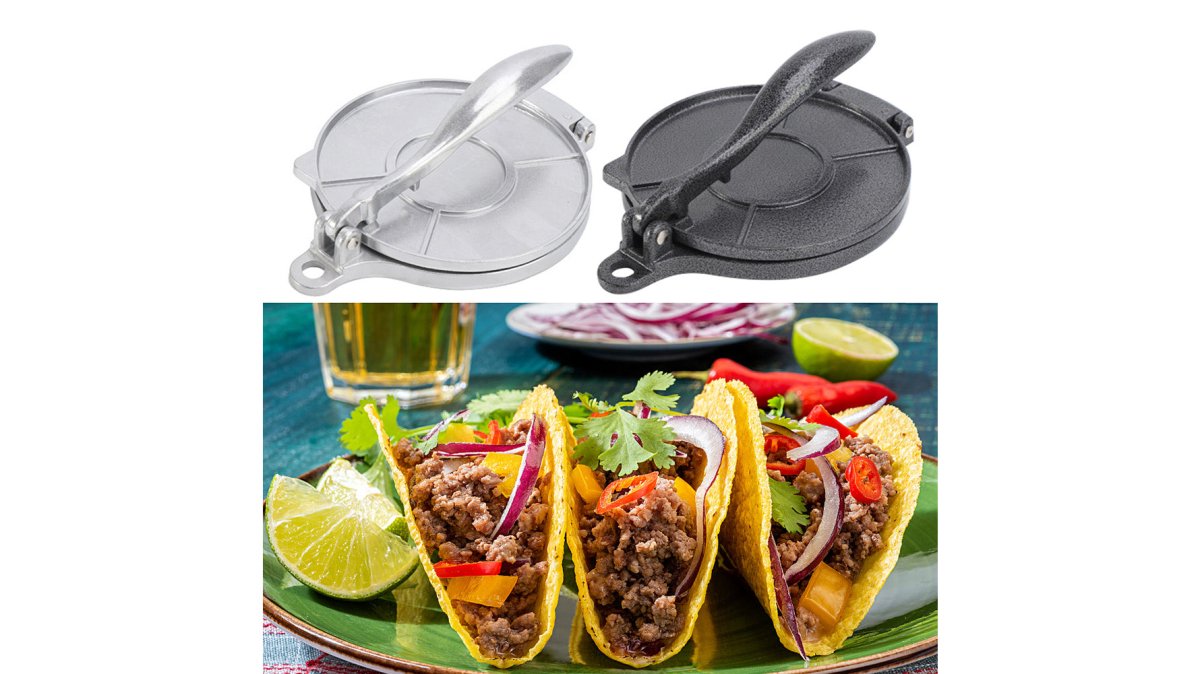
- A tortilla press. Our Aluminum Alloy Home Tortilla Maker comes in 16cm and 20cm sizes, in silver or black.
- Masa harina for corn tortillas, or all-purpose flour for flour tortillas
- Water, salt, and a fat such as oil or lard
The 20cm press handles burrito-size rounds. The 16cm model suits taco and street-style tortillas.
Mix, Knead, Rest, and Divide the Dough
Corn dough is forgiving.
Flour dough needs more attention. Combine flour and salt, cut in your fat, then add warm water gradually.
Then let it rest, the step people rush, and the one that matters most.
Resting lets gluten relax so the dough stops springing back when pressed.
Divide the dough into golf-ball-size balls for small tortillas or ping-pong-size for larger ones.
How to Use a Tortilla Press Without Wrecking the Dough
Line the press, place one dough ball slightly off-center toward the hinge, and close the handle with steady pressure. Hold for a second, open, and lift the tortilla by its liner.
How Press Material and Size Change Your Results
Not all presses apply force the same way:
- Cast aluminum or aluminum alloy: Light, rust-resistant, and the most common home option. The plates are rigid, so pressure transfers evenly across the round. Best for corn tortillas and rested flour dough. Our Aluminum Alloy Home Tortilla Maker falls in this category.
- Cast iron: Heavy and slow to warm, but the mass holds steady pressure once you lean on the handle. The trade-off is weight, tiring across a 24-tortilla batch, and the plates can chill dough if the press sat in a cool spot.
- Wood: Traditional and handsome, but wood plates flex under load and absorb moisture over time. Expect to re-season or oil them, and expect slightly less consistent thickness than metal.
Plate diameter matters too. A 16cm (about 6.3 inch) press yields taco and street-style rounds roughly 5 to 6 inches across; a 20cm (about 7.9 inch) press gets burrito-size rounds in the 7 to 8 inch range. A 20cm dough ball in a 16cm press squeezes past the plates.
Why the Hinge Side Gets More Force
A manual press is a lever: the hinge is the fulcrum, the handle applies effort, and the plates sit between them. The hinge-side edge closes first and hardest, so nudging your dough ball about a quarter inch toward the hinge evens out thickness.
Don't slam the handle, hard, fast pressure thins the edges and leaves the middle thick. Firm, even pressure for one to two seconds gives consistent thickness: about 1/16 inch for corn, 1/8 inch for flour.
When a Rolling Pin Beats the Press
A press is the wrong tool in three situations:
- Your flour dough is under-rested. Gluten that hasn't relaxed will spring back the moment you lift the handle, and no amount of extra pressure fixes it. Roll instead, or wait another 20 minutes.
- You want an oversized round. Most home presses top out around 8 inches. A 10-inch burrito tortilla needs a rolling pin and a big board.
- Your dough is very high-hydration or enriched with a lot of fat. Soft, slack doughs squish out the sides of a press rather than flattening evenly. Roll these between two sheets of parchment.
For everything else, corn tortillas, rested flour dough, and any batch needing repeatable rounds fast, the press wins on speed and consistency.
Lining the Press and Getting an Even Round
A bare press will grab your dough. Always use a liner.

- Parchment paper: clean, reusable for a batch, and works for both corn and flour
- Plastic liner: a cut zip-top bag works well and peels off flour dough easily
- Silicone mats: good grip, but thicker mats reduce how flat your tortilla gets
For flour tortillas, place the dough ball between two liners, close the press, then rotate a quarter turn and press again to even out thin spots.
If the tortilla comes out lopsided, your dough ball wasn't round to begin with. Reshape it and try again.
Tortilla Press Tips for Flour Tortillas (and Where Corn Wins)
Corn tortillas are what a press was built for: masa harina dough has no gluten, so it doesn't fight back, and one press gives a clean, even round. Flour is different, the gluten network that makes it chewy also makes it snap back the moment you lift the handle.
Here's the side-by-side most guides skip:
| Corn (masa harina) | Flour (all-purpose) | |
|---|---|---|
| Dough behavior | No gluten; behaves like soft clay | Elastic gluten network; springs back |
| Hydration feel | Firm, slightly crumbly until pressed | Soft and tacky; needs more rest |
| Rest time before pressing | 5 to 10 minutes is plenty | 30 minutes minimum, 1 to 2 hours better |
| Press technique | One firm press, lift by liner | Press, rotate a quarter turn, press again |
| Target thickness | About 1/16 inch | About 1/8 inch |
| Expected result | Even round, slight puff on the comal | Even round with a light roll finish if needed |
| Freezer performance | Excellent; holds texture | Good if wrapped airtight; dries out easily |
If you only remember one row, remember the rest time. Corn dough is ready almost as soon as it's mixed. Flour dough needs the clock on its side.
Why Flour Dough Springs Back
Gluten is elastic: stretch it and it pulls back toward its original shape, which is why a flour tortilla shrinks after pressing.
Aluminum Alloy Home Tortilla Maker →
Resting relaxes those gluten strands, and warmth helps. Dough that's sat covered for 30 minutes presses far flatter than dough mixed five minutes ago.
If your flour tortillas keep shrinking, you have two levers: more rest time or a wetter dough.
Adjustments That Make Flour Dough Press-Friendly
- Use a slightly wetter dough than you would for rolling, add water a teaspoon at a time until the dough just barely clings to your fingers
- Rest the dough longer, at least 30 minutes, covered so the surface doesn't dry
- Press once, rotate a quarter turn, press again to even out thin spots
Many cooks skip the press for flour and reach for a rolling pin. That's valid, but for speed and repeatable rounds, the press wins once your dough is properly rested.
Where Corn Quietly Wins
Corn tortillas are the press's home turf for three reasons. No gluten means no spring-back, so the round you press is the round you cook. Masa harina rehydrates fast, a five-minute rest stops the crumbling. And even pressure helps: a slightly thicker center puffs on the comal, the sign of a properly made tortilla. If you're new to the press, start with corn: you'll learn the motion without fighting the dough before taking on flour.
How to Keep Tortilla Dough From Sticking to the Press
Sticking almost always means one of three things: no liner, dough too wet, or dough too warm.
Start with a liner. Parchment or a plastic sheet solves most sticking on its own.
If dough still clings, dust the liner lightly with flour for flour dough or masa harina for corn.
Sticky dough usually needs a mixing-stage adjustment: add flour a tablespoon at a time until the dough stops clinging to your fingers, or masa harina the same way for corn.
How to Cook Homemade Tortillas on a Skillet
Preheat a comal or cast-iron skillet over medium-high heat.
For flour tortillas, look for golden spots on both sides.
Don't crowd the pan, two tortillas at a time on a large comal is plenty.
As each finishes, tuck it into a clean towel or tortilla warmer, stacking keeps them soft and pliable.
If your tortillas turn out stiff, the pan was too hot or you cooked them too long.
Troubleshooting: Thickness, Temperature, and Texture
Most problems come down to three variables: dough moisture, rest time, and pan heat.
| Problem | Likely Cause | Fix |
|---|---|---|
| Tortilla cracks at the edges | Dough too dry or cold | Add water, let dough warm up |
| Thick center, thin edges | Uneven press pressure | Move dough ball toward hinge |
| Tortilla springs back | Not rested long enough | Rest 30 minutes or more |
| Dough sticks to press | No liner or dough too wet | Use parchment, add flour |
| Tortillas turn out stiff | Pan too hot, cooked too long | Lower heat, shorten cook time |
| No bubbles form | Pan not hot enough | Preheat longer |
Work through one change at a time. Adjusting three things at once makes it impossible to know what fixed the problem.
Storing, Reheating, and Making Tortillas Ahead
Homemade tortillas keep well if stored right. Cool them completely, then stack with a sheet of parchment between each one.
- Counter: 2 days in a sealed bag or airtight container
- Fridge: up to 1 week in a sealed bag
- Freezer: up to 2 months, wrapped tight
To reheat, warm a dry skillet over medium heat and heat each tortilla about 20 seconds per side.
For make-ahead batches, press and cook the full batch, then freeze in stacks of six with parchment between each tortilla.
Corn tortillas freeze better than flour; flour tortillas dry out if the wrap isn't airtight, so double up on the wrapping.
Conclusion
The gap between a tough tortilla and a tender one comes down to patience: resting the dough, preheating the pan, and pressing with steady pressure instead of force. None of it is difficult.
If you're ready to make this part of your kitchen routine, our Aluminum Alloy Home Tortilla Maker is built for exactly this job: lightweight, in two sizes, with a manual design that gives you full control over pressure.
Frequently Asked Questions
Do you need a tortilla press to make homemade tortillas?
No. America's Test Kitchen notes you can flatten dough with a glass pie plate instead, and a rolling pin between silicone mats works too. A press earns its place when you make corn tortillas often, since masa harina dough cracks easily under a rolling pin. For flour tortillas, a press speeds up the work but a rolling pin gives you more control over thickness.
Is it better to roll or press flour tortillas?
A press flattens flour dough fast, but the dough springs back, so rounds can shrink after you lift the top plate. One cook on r/AskCulinary switched to a rolling pin between silicone mats after a press attempt fell short. Try pressing lightly first, then finish with two or three passes of a rolling pin if the round pulls in at the edges.
How do you keep tortilla dough from sticking to a press?
Line both plates with parchment paper or a cut plastic bag, and dust the dough ball lightly with flour or masa harina. If the dough still sticks, it is too wet. Add a spoonful of flour or masa, knead it in, and rest the dough another 15 minutes so the extra flour hydrates before you press again.
How do you keep homemade tortillas soft after cooking?
Stack them in a clean kitchen towel or a tortilla warmer as each one comes off the skillet. The trapped steam keeps them pliable while you finish the batch. For longer storage, let the stack cool, then seal it in a zip-top bag. Reheat on a dry skillet for about 30 seconds per side or wrap the stack in a damp paper towel and warm it briefly.


