


Table of Contents
- Why Cleaning Your Tortilla Press After Use Matters
- Step 1: Wipe Away Masa and Food Residue
- Step 2: Rinse and Use Soap and Water Safely
- Step 3: Dry Your Tortilla Press Thoroughly
- How to Remove Dried Masa from a Tortilla Press
- How to Prevent Rust on a Cast-Iron Tortilla Press
- How to Season a Cast-Iron Tortilla Press and Keep Tortillas from Sticking
- Frequently Asked Questions
Last Updated: October 15, 2026
Why Cleaning Your Tortilla Press After Use Matters
A tortilla press makes fresh, homemade tortillas easy, but like any tool that touches food, it needs proper care.
Dried masa hardens and becomes much tougher to clean, and built-up residue can affect how evenly your tortillas cook. On cast-iron presses, skipped cleanup leads to rust.
The steps are straightforward: wipe, rinse, dry, and store. This guide covers how to clean a tortilla press after use, plus stubborn dried masa, rust prevention, and seasoning.
Step 1: Wipe Away Masa and Food Residue
The first step in how to clean a tortilla press after use is removing fresh masa before it hardens, while it still wipes off easily.
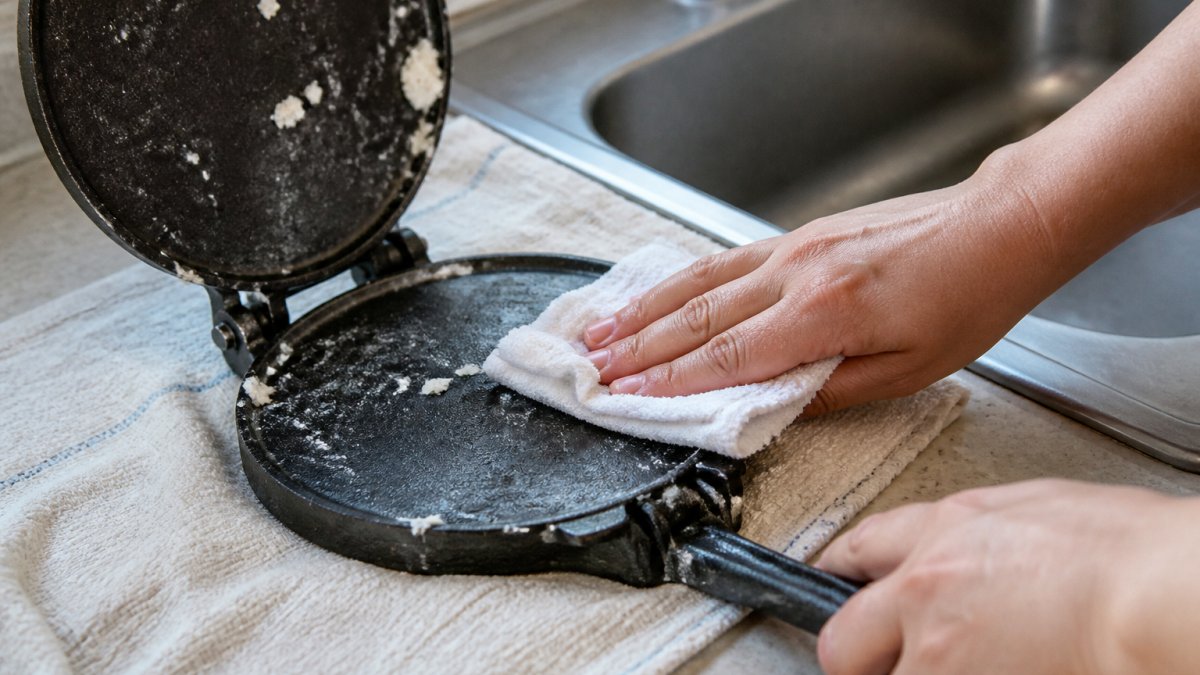
Use a damp cloth or soft rag to wipe both plates, top first, then flip and wipe the bottom.
Pay special attention to the edges and hinges where masa collects.
Most residue comes off here. For stubborn bits, don't scrub hard, just move to the next step where soap and water loosen them.
Step 2: Rinse and Use Soap and Water Safely
After wiping away loose masa, rinse the press under warm running water to remove remaining dough particles and prepare the surface for soap.
Soap and water are safe for tortilla presses, even cast-iron ones.
Use a soft sponge or cloth to gently scrub the plates.
Rinse thoroughly under warm water until all soap is gone, including in the crevices. For aluminum presses, soap won't cause damage.
Step 3: Dry Your Tortilla Press Thoroughly
Drying is the most critical step in how to clean a tortilla press after use, especially for cast-iron models.
Dry your press right away while it's still warm from rinsing.
Pay special attention to:
- The hinges and moving parts
- The edges where plates meet
- Any grooves or textured areas
- The underside of the plates
For cast iron, some people towel it dry, then place the warm press in a low oven (around 200°F) for 5 minutes to evaporate hidden moisture and prevent rust.
Leave the press open or propped up after drying so air circulates. Never stack it closed or store it in a damp cabinet right after washing.
How to Remove Dried Masa from a Tortilla Press
Dried masa is the most common reason a tortilla press ends up neglected. Once the dough loses moisture, it bonds to the metal like thin cement, and the longer it sits, the harder it is to lift without scratching. The fix is matching the method to your press material, not scrubbing harder.
Start with the gentlest method that works
Work through these in order and stop as soon as the residue releases:
- Dry-lift first. Before adding water, flex a plastic scraper or silicone spatula under the dried edge. Dry masa often pops off in one piece because it shrank as it dried, clearing most of the plate.
- Warm-water compress. Lay a folded, warm (not hot) damp cloth over the spots for 5 to 10 minutes to soften the masa from the surface down.
- Targeted soak. Only if the compress fails, soak the affected area within the material limits below.
- Mechanical lift. Use a soft-bristle brush (an old toothbrush works) for hinges, seams, and the pivot pin; a wooden skewer or plastic scraper handles flat plate residue.
Soak limits by material
Soaking is where most presses get damaged, since the safe window varies by material:
Aluminum Alloy Home Tortilla Maker →
- Cast iron: No more than 10 to 15 minutes in warm water. Cast iron is porous, and any water reaching bare metal starts rust immediately. Never leave it submerged overnight or soak it while you do other dishes.
- Aluminum (including anodized): Warm water is safe, but avoid prolonged soaking in very hot water, which dulls anodized finishes. 15 to 20 minutes is a reasonable ceiling.
- Carbon steel: Treat it like cast iron, 10 to 15 minutes maximum, since it rusts even faster.
- Nonstick-coated plates: Skip soaking entirely. Use the warm compress and a soft cloth only, since abrasion and prolonged moisture shorten the coating's life.
Never use steel wool, metal scrapers, or abrasive powders on any press. They scratch cast iron, strip seasoning, and gouge nonstick coatings. A plastic scraper and a soft brush handle every job.
Getting masa out of hinges and seams
The hinge and pivot pin are where dried masa hides and most people give up. Techniques that work:
- Work the joint open and closed while still slightly damp; the movement cracks dried masa loose from inside.
- Scrub the seam line with a soft-bristle brush dipped in warm water, then wipe with a cloth wrapped around a thin handle.
- A wooden toothpick or skewer reaches a stubborn pivot pin without scratching.
- If the hinge is seized, hold a warm compress against the joint for 10 minutes. Do not force it open, as you can bend the hinge plate.
After the residue is gone
Once the dried masa is gone, wash and dry the press as after normal use, then re-oil cast iron and carbon steel immediately. Dried-masa cleanup strips more protective layer than a routine wipe-down, so reapply a light coat of oil rather than skip it.
Dried masa is a moisture problem, not a scrubbing problem. Soften it, lift it with plastic or soft bristles, and match soak time to the metal. Ten patient minutes beats two aggressive ones.
What not to do
- Never put any tortilla press in the dishwasher; heat and detergents strip seasoning, dull finishes, and can warp thinner plates.
- Never use oven cleaner, bleach, or harsh chemicals on a food-contact surface.
- Never chip at dried masa with a knife tip or metal scraper; the scratch becomes a rust starter on cast iron and a coating failure on nonstick.
- Never let a cast-iron or carbon-steel press air-dry after soaking. Towel it, then warm it briefly to drive off hidden moisture.
How to Prevent Rust on a Cast-Iron Tortilla Press
A light coating is all you need. Too much oil makes the press slippery and attracts dust, so wipe away excess with a clean cloth before storing.
Store the press in a dry place, never a damp basement or humid cabinet.
If rust appears, don't panic. Light surface rust comes off by scrubbing gently with a soft cloth and a little oil, then drying immediately.
How to Season a Cast-Iron Tortilla Press and Keep Tortillas from Sticking
Seasoning and oiling are different, and mixing them up is the most common reason people ruin a cast-iron press or give up on it. Oiling is a thin protective film applied after every wash. Seasoning is a baked-on layer of polymerized oil that becomes part of the metal. You build seasoning over time; you apply oil every time.
What seasoning actually is
When a very thin layer of oil is heated past its smoke point, it polymerizes: the oil molecules link into a hard, smooth, plastic-like film bonded to the iron. That film makes a press release tortillas cleanly and resist rust. It is not grease, and you cannot just wipe it on and walk away.
A real seasoning procedure
- Start clean and dry. Wash, dry thoroughly, and warm the press slightly so it is dry to the touch.
- Apply a whisper-thin coat. Rub a few drops of high-smoke-point oil over every surface with a lint-free cloth, then wipe it back off until the press looks almost dry. If it looks wet or shiny, you used too much, and excess oil turns sticky and gummy instead of hard.
- Heat it. Place the press open in a 400°F to 450°F oven for one hour, with foil on the rack below to catch drips. Some smoke is normal, that is the oil polymerizing.
- Cool in the oven. Turn the oven off and let the press cool inside to avoid thermal shock and let the layer set evenly.
- Repeat two to three times for a new press. Each cycle adds a thin layer. A press used and re-oiled regularly for months develops a dark, glassy surface without deliberate seasoning sessions.
Flaxseed oil is traditional because it polymerizes hard and dark, but it is expensive and goes rancid quickly. Any neutral high-smoke-point oil, such as canola, grapeseed, or vegetable oil, works well. Avoid olive oil and butter, which have low smoke points and leave sticky residue.
Oiling after every use (the part that actually prevents rust)
Seasoning protects the cooking surface. Oiling protects the whole press between uses. After every wash and thorough dry:
- Warm the press slightly so trace moisture evaporates.
- Wipe the plates, edges, and hinge with a few drops of neutral oil on a cloth.
- Buff off the excess; a greasy press attracts dust and goes rancid.
This takes under a minute and is the single habit that keeps cast iron rust-free.
Why tortillas stick, and how to fix it
If tortillas tear or cling, work through this list in order:
- The dough is too wet. Masa should feel like soft playdough, not sticky. Add masa harina a tablespoon at a time until it holds a ball without clinging to your palm.
- The press is cold. A cold press grabs dough. Warm the plates briefly by pressing a few sacrificial rounds or setting the press near (not on) a warm stovetop.
- The liner is missing or worn. A cut zip-top bag or parchment between the plates is standard and does most of the release work. Replace it when it wrinkles or tears.
- The seasoning is thin or uneven. Apply another thin coat of oil and heat it, or just keep using the press; seasoning builds with use.
Material check: not every press needs seasoning
Seasoning applies to cast iron and carbon steel. If your press is aluminum, anodized aluminum, or nonstick-coated, do not season it: those surfaces are already non-reactive and nonstick, and baking oil onto them at high heat can damage the finish. Clean, dry, and a light wipe of oil is all they need, and many aluminum presses need no oil at all.
Seasoning is baked on, oiling is wiped on, and they solve different problems. Season cast iron and carbon steel a few times when new, oil after every wash, and let regular use do the rest. If your press is aluminum or nonstick, skip seasoning and just keep it clean and dry.
Frequently Asked Questions
Can you wash a cast-iron tortilla press with soap and water?
Yes, you can safely use soap and water to clean a cast-iron tortilla press after use. The myth that soap damages cast iron is outdated. Use a damp cloth with mild soap to wipe the plates, then rinse thoroughly with clean water. Dry immediately with a soft cloth or paper towels to prevent rust. Cast iron is durable enough to handle regular soap cleaning when you dry it right away.
How do you remove dried masa from a tortilla press?
If masa has dried and stuck to the plates, soak a cloth in warm water and hold it against the stuck dough for 2-3 minutes to soften it. Gently wipe away the residue with the damp cloth. For stubborn buildup in hinges or seams, use a soft-bristled brush or old toothbrush to loosen the dried masa, then wipe clean. Avoid abrasive scrubbers that can damage the press surface. Rinse thoroughly and dry immediately.
Should you oil a cast-iron tortilla press after cleaning?
Yes, applying a light coat of oil after cleaning helps prevent rust on cast-iron presses. After drying your press completely, use a paper towel or soft cloth to apply a thin layer of neutral oil (vegetable, canola, or mineral oil) to both plates. This seasoning step protects the iron and improves non-stick performance over time. Wipe away excess oil to avoid buildup. For aluminum presses, oil is optional but can help maintain the finish.
What's the best way to store a tortilla press to prevent rust?
Store your tortilla press in a dry location away from moisture. If your press came with a plastic liner or plastic between the plates, keep it in place during storage to reduce direct contact between the plates and air. Store it in a cool, dry cupboard or shelf rather than near a sink or in humid areas. If you've applied oil after cleaning, the light coating will further protect against rust during storage.
Cleaning your tortilla press after every use is the best way to keep it working well and lasting for years. A few minutes of care prevents rust, keeps the plates smooth, and ensures your tortillas cook evenly every time. Whether you use cast iron or aluminum, the routine is simple: wipe, rinse, dry, and store. Your press will reward you with perfect tortillas for years to come.


