


Table of Contents
- Assess Your Puppy's Age and Teething Stage
- Match Toy Size to Your Puppy's Weight and Breed
- Understand Safe Chew Toys for Puppies
- Evaluate Chewing Strength and Select Best Chew Toys for Teething Puppies
- How to Tell If a Dog Toy Is Too Hard
- When to Replace Puppy Chew Toys
- Create a Selection Checklist
- Frequently Asked Questions
Last Updated: October 14, 2026
Assess Your Puppy's Age and Teething Stage
A puppy's age determines which chew toy for puppies works best. Puppies under 12 weeks have sensitive gums and need soft options; those between 3-6 months are actively teething and need gum-soothing toys; puppies 6+ months can handle firmer, more durable toys.
Teething typically peaks between 4-6 months, when baby teeth fall out and adult teeth come in. Frozen or soft rubber toys provide relief; once adult teeth are in (around 7-8 months), you can introduce more challenging chew toys.
Watch for signs your puppy is ready to advance:
- Increased interest in chewing
- Ability to grip and manipulate toys without dropping them
- No more bleeding or swollen gums
- Stronger jaw development
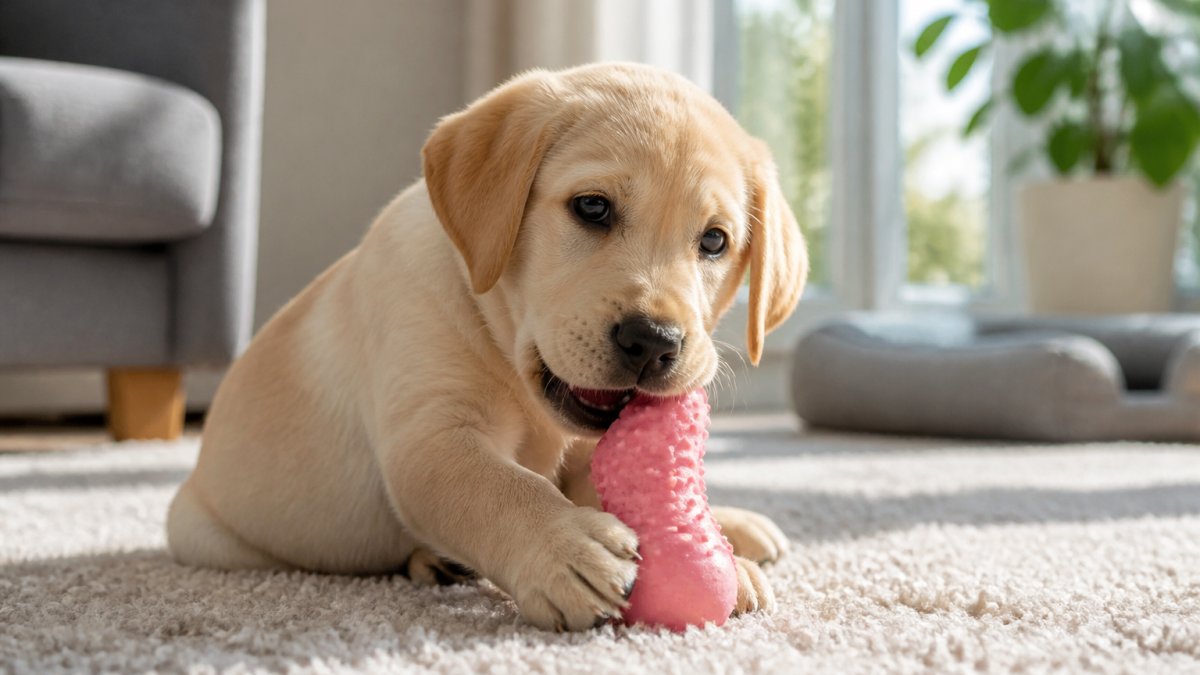
Age-appropriate selection prevents frustration and injury: a toy too hard can crack baby teeth, while one too soft won't satisfy an older puppy's chewing drive.
Match Toy Size to Your Puppy's Weight and Breed
Toy size matters more than most owners realize: too small poses a choking hazard, too large frustrates your puppy because they can't grip it properly.
Use these guidelines based on puppy weight:
- Under 10 lbs: toys 2-3 inches long
- 10-25 lbs: toys 3-5 inches long
- 25-50 lbs: toys 5-7 inches long
- Over 50 lbs: toys 7+ inches long
Breed matters too. Small-breed puppies like Chihuahuas need proportionally smaller toys. Large-breed puppies like German Shepherds need bigger toys to match their jaw size and strength.
The rule: your puppy should be able to hold the toy in their mouth comfortably without it being a choking risk. They shouldn't be able to swallow it or fit it completely inside their mouth.
Test the fit before buying: if your pinky finger won't fit beside the toy in your puppy's mouth, it's likely too large; if the entire toy fits inside, it's too small.
Understand Safe Chew Toys for Puppies
Not every toy marketed for puppies is actually safe. According to veterinary guidance from the Drake Center, the safest choice depends on a dog's size, age, chewing style, and individual habits. A toy suitable for a gentle chewer may not suit another dog.
Safe materials for puppy chew toys include:
- Natural rubber (TPR material)
- Soft nylon designed for puppies
- Rope toys with knots
- Plush toys with secure seams
- Food-stuffed toys designed for puppies
Materials to avoid or use with caution:
- Hard plastic that can splinter
- Antlers and bones (risk of broken teeth)
- Rawhide (choking and digestion risks)
- Toys with small parts that detach easily
- Anything with toxic dyes or coatings
At Lesara's Odds & Ends, we stock chew toys designed with puppy safety in mind. The Beef-Flavored Nylon Dog Chew Toy ($40.59) features durable nylon construction that satisfies chewing instincts while promoting dental health through its molar-cleaning design.
Research from veterinary dentists at Bayshore Veterinary Hospital notes that many veterinarians recommend preventing puppies from chewing anything hard, including nylon, bones, and antlers. This means soft rubber and plush options are often the safer starting point.
Evaluate Chewing Strength and Select Best Chew Toys for Teething Puppies
Chewing strength varies dramatically between puppies. Some are gentle, cautious chewers. Others are aggressive, destructive chewers from day one. Matching toy durability to your puppy's style prevents frustration and safety issues.
Assess your puppy's chewing style by observation:
- Light chewers: mouth toys gently, lose interest quickly, prefer softer textures
- Moderate chewers: chew regularly but don't destroy toys, can handle medium-firmness options
- Heavy chewers: destroy toys rapidly, shake and thrash toys, need maximum durability
For light to moderate chewers, the ChewPro Durable Dog Toy Ball ($20.88) works for fetching, chewing, or general play while helping clean teeth, making it ideal for puppies still developing their chewing strength.
For heavy chewers, look for toys specifically labeled as durable or designed for aggressive chewing. These typically use reinforced materials and thicker construction.
How to Tell If a Dog Toy Is Too Hard
A toy that is too hard can crack, chip, or fracture a puppy's developing teeth.
The thumbnail test. Press your thumbnail firmly into the toy's surface. If you can leave a small indent, the toy is appropriately firm for most puppies.
ChewPro Durable Dog Toy Ball →
The knee-tap test. Tap the toy against your knee. A hollow, hard, plastic-or-bone-like sound is a warning sign. A muted, dull sound usually means the material has some give.
The chew-sound test. Listen while your puppy chews. Steady clicking or clacking means teeth are striking a rigid surface repeatedly. Occasional soft squeaks or squishes are normal.
Material-by-material hardness reference for puppies under 6 months:
| Material | Typical hardness | Puppy suitability |
|---|---|---|
| Soft natural rubber (TPR) | Yields to thumbnail | Good for teething |
| Firm natural rubber | Slight give | Good for moderate chewers 4+ months |
| Soft nylon | Resists thumbnail | Borderline; watch for wear on teeth |
| Hard nylon | No give | Not for puppies under 6 months |
| Antlers, hooves, bones | No give | Avoid; fracture risk |
| Rope | Soft, fibrous | Good, but supervise for strand ingestion |
| Plush | Very soft | Good for comfort, not for heavy chewers |
Most veterinary dentists advise against giving puppies anything they cannot flex with hand pressure.
Hard toys aren't permanently off the table.
When to Replace Puppy Chew Toys
Worn toys aren't just less fun, they're a choking and obstruction risk. A toy that has lost structural integrity can shed pieces small enough to lodge in the throat or intestine, and rough edges can cut gums and throat tissue.
The five-minute weekly inspection. Once a week, pick up every toy your puppy uses and run through this routine:
- Squeeze the whole toy. Feel for soft spots, thin walls, or areas that collapse under hand pressure.
- Run a finger along every seam and edge. Loose threads, exposed stitching, or lifted edges are failure points.
- Bend the toy. A toy that cracks, whitens at the bend, or stays deformed after release is done.
- Look inside hollow toys and squeakers. A squeaker that no longer squeaks may have been punctured, check whether the plastic reed is now accessible.
- Smell it. A persistent sour or musty odor that survives washing means bacteria have colonized the interior.
- Wash and dry. Most rubber and nylon toys are dishwasher-safe on the top rack; rope and plush usually go in a pillowcase on a gentle cycle. Dry fully before returning the toy.
Material-specific wear patterns to watch for:
- Natural rubber: small nicks are normal; deep gouges, seam tears, or a toy that won't bounce back are not.
- Nylon: a rough, fuzzy surface means shards can break off.
- Rope: frayed ends are expected; loose strands that pull free are not, swallowed rope strands cause linear intestinal obstruction.
- Plush: exposed stuffing, loose button eyes, or a torn squeaker pocket means retire it immediately.
- Food-stuffed toys: a cracked opening can trap food and grow mold.
A practical replacement cadence. Track how long each toy survives and replace on the pattern you observe:
- Light chewers: inspect weekly, replace every 2 to 3 months.
- Moderate chewers: inspect weekly, replace every 4 to 6 weeks.
- Heavy chewers: inspect every few days, replace every 2 to 3 weeks.
Write the introduction date on the toy or note it on your phone, and retire it at the end of its lifespan even if it looks intact, internal fatigue is invisible.
What to do if your puppy swallows part of a toy. This is the scenario most guides skip, and it is the one that matters most.
Signs that warrant an immediate call to your veterinarian or an emergency clinic:
- Repeated vomiting, especially within a few hours of the suspected ingestion
- Gagging, retching, or pawing at the mouth with nothing coming up
- Refusing food or water
- Abdominal pain, pacing, whining, a tucked belly, or yelping when picked up
- Straining to defecate with little or no output
- Lethargy or collapse
Call immediately if you saw your puppy swallow a piece larger than a pea, a length of rope, or a chunk of rubber, some obstructions cause no early signs and then become surgical emergencies.
Create a Selection Checklist
Use this checklist when choosing a chew toy:
| Criteria | Check | Notes |
|---|---|---|
| Age-appropriate firmness | ☐ | Soft for young puppies, firmer for older puppies |
| Correct size for weight | ☐ | Can't fit entirely in mouth, can't be swallowed |
| Safe material | ☐ | Natural rubber, soft nylon, rope, or plush |
| No small detachable parts | ☐ | Inspect seams, threads, and attachments |
| Passes thumbnail hardness test | ☐ | You can make a small indent with your nail |
| Matches chewing strength | ☐ | Light, moderate, or heavy chewer appropriate |
| No toxic dyes or coatings | ☐ | Check product description for safety certifications |
| Washable or replaceable | ☐ | Can be cleaned or affordably replaced |
Before purchase, verify the toy meets at least 7 of these 8 criteria.
Choosing the right chew toy prevents dental damage, reduces destructive chewing, and keeps your puppy safe during the critical teething months. Start with soft, age-appropriate options and progress to firmer toys as adult teeth develop. At Lesara's Odds & Ends, we offer durable, safety-tested chew toys for every stage. Our Beef-Flavored Nylon Dog Chew Toy and ChewPro Durable Dog Toy Ball provide the durability and safety puppies need while satisfying their natural chewing instincts.
Frequently Asked Questions
What is a good chew toy for an 8-week-old puppy?
At 8 weeks, puppies are beginning to teethe and need soft, flexible toys that won't damage developing teeth. Look for rubber toys, soft rubber rings, or food-puzzle toys designed for young puppies. Avoid hard nylon, bones, or anything with small parts that could be swallowed. The toy should be small enough for your puppy to hold but large enough that it cannot fit entirely in their mouth. Products like the ChewPro Durable Dog Toy Ball offer lightweight, interactive options suitable for young puppies.
What materials are safe for puppy chew toys?
Safe materials include natural rubber, TPR (thermoplastic rubber), soft nylon designed for puppies, and food-grade silicone. Avoid toys made from hard plastic, rawhide, or materials that splinter easily. Check that the toy has no loose parts, small attachments, or decorations that could become choking hazards. The Beef-Flavored Nylon Dog Chew Toy uses durable, non-toxic nylon construction with a design that massages gums while promoting safe chewing habits.
How often should I replace a puppy's chew toy?
Inspect chew toys weekly for signs of wear, cracks, or loose pieces. Replace any toy showing damage immediately, as worn toys pose swallowing and choking risks. Most puppies will outgrow soft toys within 2-4 weeks as they grow and develop stronger jaws. Hard chew toys may last longer but should be replaced every 4-8 weeks depending on chewing intensity. Always supervise chewing and remove toys that show wear and tear before they become hazardous.
How do I know if a chew toy is the right size for my puppy?
The toy should be large enough that your puppy cannot fit the entire toy in their mouth, preventing accidental swallowing. A good rule is to choose a toy slightly larger than your puppy's head. For small breeds under 10 pounds, select toys no smaller than 2-3 inches. For medium breeds (10-30 pounds), aim for 3-4 inches. For larger breeds, choose toys 4-5 inches or larger. Always match the toy size to your puppy's current weight and age, not their adult size.


