


Table of Contents
- Why Indoor Toys Matter on Rainy Days
- Interactive Dog Toys for Indoor Play
- Dog Puzzle Toys for Boredom Relief
- Treat-Dispensing Dog Toys and Slow Feeders
- Indoor Games for Dogs on Rainy Days
- Matching Toys to Your Dog's Size and Chewing Strength
- Toy Safety, Materials, and Supervision
- How to Keep Your Dog Busy Indoors
- Frequently Asked Questions
Last Updated: October 17, 2026
Why Indoor Toys Matter on Rainy Days
When weather keeps your dog inside, boredom becomes a real problem. Without daily mental and physical stimulation, dogs develop destructive behaviors: chewing furniture, excessive barking, or anxiety.
The right toys turn a lazy afternoon into enrichment, keeping your dog's mind and body active while you handle other tasks.
This guide covers the best dog toys for indoor rainy days, organized by type and need.
Interactive Dog Toys for Indoor Play
Interactive toys require your dog to engage actively, burning mental and physical energy without outdoor space.
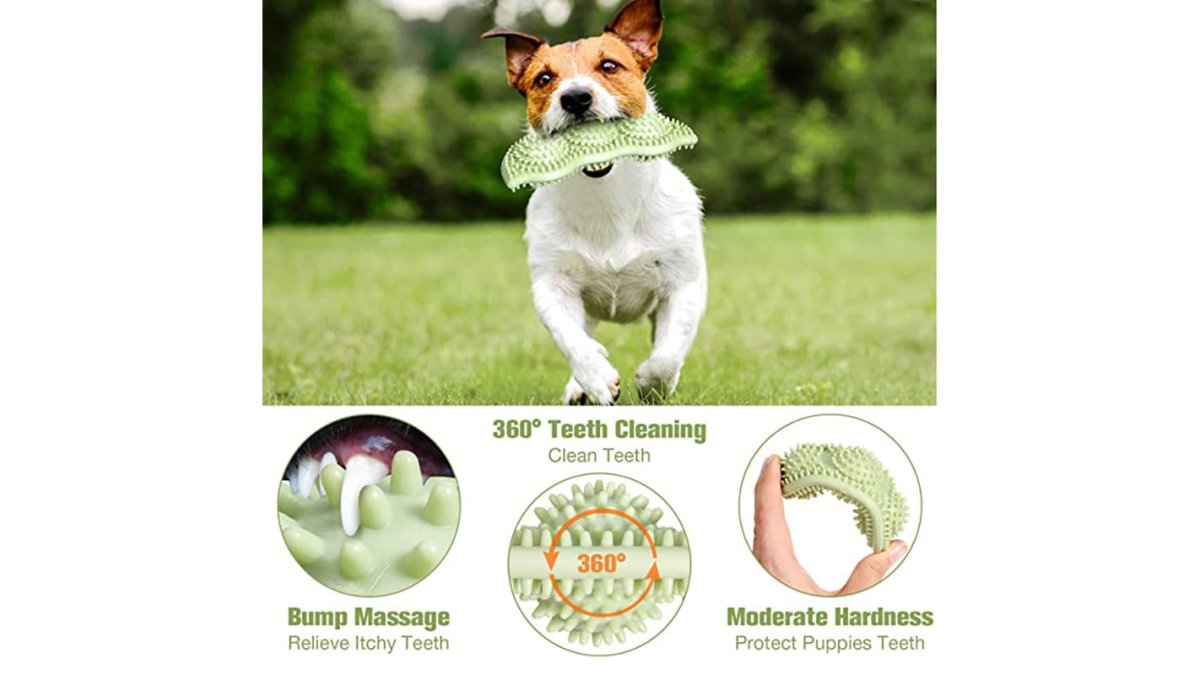
The ChewPro Durable Dog Toy Ball ($20.88) is our top pick for indoor fetching, chewing, and general play.
The lightweight design lets your dog carry, toss, and chase it without strain, and the teeth-cleaning feature delivers entertainment and dental benefits at once.
Best for: Dogs of all sizes who enjoy active play and need something durable enough for regular use.
Dog Puzzle Toys for Boredom Relief
Puzzle toys force your dog to solve a problem for a reward, delivering mental stimulation that tires dogs faster than physical play.

They work best for food-motivated dogs; start easy and progress to harder puzzles as your dog learns.
Treat-Dispensing Dog Toys and Slow Feeders
Treat-dispensing toys combine play with feeding, turning mealtime into enrichment while slowing fast eaters and improving digestion.
Slow feeders solve a real problem: fast eaters often experience bloating, indigestion, or regurgitation. Working for each bite paces consumption and adds mental stimulation.
They work with any treat: kibble, peanut butter, wet food, or yogurt. Wet treats make extraction harder; kibble makes it easier.
Dog Lick Mat for Extended Mental Work
The Dog Lick Mat - Slow Feeder & Anxiety Relief Mat for Dogs ($22.40) transforms mealtime into a calming ritual.
Extended licking triggers relaxation responses in your dog's brain. The slow-feeding design also promotes digestion and prevents bloating.
The mat is dishwasher safe and works for dogs and cats of all sizes.
Best for: Dogs that need anxiety relief, fast eaters, or any dog benefiting from extended feeding time, especially on rainy days when outdoor activity isn't possible.
Indoor Games for Dogs on Rainy Days
Games give indoor play structure and require your participation, which many dogs miss when the backyard is off-limits. Whether a game works in a small apartment or ends with a knocked-over lamp comes down to three variables: space, noise, and flooring.
Scent work and hide-and-seek
Scent games are the quietest, most space-efficient option and work for almost any dog. Start with three to five treats hidden in obvious spots and let your dog watch the first round; once they understand the game, hide treats out of sight across rooms.
Trainers often build a "scent circuit" of five to eight hides around one room, then release the dog with a cue like "find it." Scent work taps natural foraging behavior, delivering mental fatigue without the noise or floor risk of chase games, and suits seniors and injured dogs since it requires no jumping.
Indoor fetch that doesn't wreck the house
Fetch adapts indoors if you control the toy, surface, and throw length. Use a soft toy or lightweight ball that won't ricochet, and play on a rug rather than bare hardwood or tile, slippery floors are a real injury risk, especially for older dogs and long-backed breeds.
Keep sessions to 5 to 10 minutes and end on a successful retrieve. Rolled throws along the floor are safer than high bounces in a confined space, and far quieter for downstairs neighbors than a bouncing ball on hardwood.
Tug with clear rules
Tug provides vigorous physical engagement and doubles as impulse-control practice. Use a rope or fleece tug long enough to keep your hand away from your dog's mouth, and set two rules from the first session: your dog releases on cue ("drop it"), and the game pauses the moment teeth touch skin.
Tug isn't for every dog. Dogs that become over-aroused, guard the toy, or snap should skip tug or work on release cues first. For most dogs, three to five rounds of 30 to 60 seconds each is plenty.
Training games and impulse-control challenges
Short training sessions count as games and tire dogs similarly to physical play. A 10- to 15-minute session practicing sit, stay, down, place, or a new trick provides real mental work. Two useful games:
Dog Lick Mat – Slow Feeder & Anxiety Relief Mat for Dogs | Calming Pet Toys →
- Find the cup: Hide a treat under one of three cups and let your dog choose. This builds problem-solving and nose work with almost no space.
- Go to place: Send your dog to a mat or bed and reward for staying while you move around the room. This is a calm-down game as much as a training one.
Matching the game to your space and dog
| Game | Space needed | Noise level | Best for |
|---|---|---|---|
| Scent circuit | Low (one room) | Very quiet | All ages, seniors, apartment living |
| Indoor fetch | Medium (hallway or rug) | Moderate | Active dogs, short bursts |
| Tug | Low | Low to moderate | Impulse-control practice |
| Training games | Very low | Quiet | Puppies, mental fatigue |
Matching Toys to Your Dog's Size and Chewing Strength
Toy selection depends on your dog's physical characteristics.
Small dogs (under 15 pounds) need toys they can carry and manipulate; the ChewPro toy's lightweight design works well here.
Medium dogs (15-50 pounds) can handle standard-sized balls, ropes, and puzzle toys.
Large and giant dogs (over 50 pounds) need heavy-duty options.
Best for: Aggressive chewers and large breeds needing extended chewing sessions.
Toy Safety, Materials, and Supervision
Material quality determines safety and longevity; non-toxic, durable materials prevent injury and outlast cheap alternatives.
Supervise puzzle toys and treat dispensers initially to ensure your dog doesn't destroy them.
Toys with small parts, squeakers, bells, or plastic eyes pose choking risks.
Rope toys require supervision because dogs can ingest fibers; use them only during active play.
Clean toys regularly.
Store toys in a designated area and rotate them to prevent boredom and extend lifespan.
How to Keep Your Dog Busy Indoors
Most rainy-day guides say "rotate toys and stick to a routine" and stop there. The useful question is how much enrichment actually replaces the missing walk, and how to build a day that fits your dog's energy, your space, and your neighbors.
Set expectations: enrichment complements exercise, it doesn't replace it
Mental work is tiring but not a one-to-one substitute for exercise. On a rainy day, stack two or three mental sessions plus short physical bursts.
Watch your dog rather than the clock. A dog that settles and sleeps after a session got enough; one that paces, mouths furniture, or barks at the door an hour later needs another outlet.
Build a day in three layers
Layer 1: Active play (10 to 20 minutes, once or twice). A short fetch or tug session in the morning takes the edge off.
Layer 3: Calm-down work (10 to 15 minutes, as needed). Lick mats, a long chew, or a place-and-stay session help your dog settle after activity and are especially useful before you need quiet time or before guests arrive.
Quiet toys for apartments and shared walls
In an apartment with neighbors below, noise is a real constraint. Soft toys rolled along a rug, scent games, lick mats, and puzzle toys are quiet; bouncing balls on hardwood, squeaky toys, and vigorous tug near furniture are not.
Flooring matters for safety as much as noise. Hardwood, tile, and laminate are slippery, especially for seniors and long-backed breeds. A rug runner, yoga mat, or non-slip mat under the play area reduces injury risk and makes indoor fetch and tug safer.
Cleaning and maintenance between sessions
Food-based enrichment leaves residue. Rinse and wash lick mats and slow feeders after each use; many are dishwasher safe. Puzzle toys and treat dispensers trap crumbs and saliva in crevices, so rinse with warm water and pet-safe soap and dry fully before refilling. Check chew toys for cracks, fraying, or detached pieces after every session and discard anything damaged.
A sample rainy-day schedule
| Time | Activity | Duration | Your involvement |
|---|---|---|---|
| Morning | Short fetch or tug on a rug | 10 to 15 min | Active |
| Late morning | Puzzle toy or treat dispenser | 20 to 30 min | Minimal |
| Midday | Scent circuit or training game | 10 to 15 min | Active |
| Afternoon | Lick mat or long chew | 20 to 30 min | Minimal |
| Evening | Training session or calm-down place work | 10 to 15 min | Active |
Adjust sessions to your dog's age and energy. Puppies and seniors do better with shorter, more frequent sessions; high-drive adults may need the active layer twice.
Rotate, don't stockpile
A dog with five toys out at once gets less engagement than one with two rotated every few days. Keep a small set in rotation and store the rest out of reach; novelty does most of the work.
Frequently Asked Questions
What are the best dog toys for indoor rainy days?
The best dog toys for indoor rainy days combine mental stimulation, physical engagement, and safety. Puzzle toys, treat-dispensing toys, chew toys, and interactive toys all work well. The Dog Lick Mat ($22.40) provides extended calm engagement with treats, while the ChewPro Durable Dog Toy Ball ($20.88) offers lightweight fetch and chewing options. The Beef-Flavored Nylon Dog Chew Toy ($40.59) keeps aggressive chewers occupied for hours. Choose based on your dog's size, chewing strength, and whether they need mental or physical activity.
How long should dogs play with interactive dog toys for indoor play?
Most dogs benefit from 15-30 minutes of active interactive play sessions spread throughout the day. Puzzle toys and treat-dispensing toys can hold attention for 10-20 minutes per session. Chew toys can occupy dogs for 30+ minutes depending on the toy's durability and your dog's chewing strength. On rainy days when outdoor exercise is limited, aim for multiple short sessions rather than one long session to maintain mental engagement and prevent boredom without overstimulation.
Are puzzle toys good for dogs on rainy days?
Yes, puzzle toys are excellent for rainy days because they provide mental stimulation that tires dogs out as much as physical exercise. Puzzle toys require problem-solving, impulse control, and focus, which keeps dogs mentally engaged indoors. They're especially useful when weather prevents outdoor walks. Rotating different puzzle toys throughout the day prevents habituation and maintains your dog's interest. Combined with treat-dispensing toys and chew toys, puzzles create a balanced enrichment routine for indoor days.
How do I choose a safe indoor toy for my dog?
Choose toys made from non-toxic materials appropriate for your dog's size and chewing strength. Check that toys have no small parts that could be swallowed, sharp edges, or loose pieces. The Beef-Flavored Nylon Dog Chew Toy is crafted from tough, non-toxic nylon and comes in sizes for small, medium, and large dogs. Always supervise playtime with new toys. Inspect toys regularly for damage or wear. Soft toys work for gentle chewers, while durable nylon chew toys suit aggressive chewers. Rotate toys to maintain interest and reduce wear.


