


Table of Contents
- The Real Cost-Benefit of a Washable Dog Bed
- Washability, Durability, and Long-Term Use
- How to Wash a Dog Bed Without Damage
- How Often to Wash a Dog Bed for Hygiene
- Dog Bed with Removable Washable Cover: Why It Matters
- Which Dogs Benefit Most From Washable Beds
- Verdict: Is It Worth the Investment?
- Frequently Asked Questions
Last Updated: October 17, 2026
The Real Cost-Benefit of a Washable Dog Bed
A washable dog bed is worth the investment if you have a dog prone to accidents, shedding heavily, or drooling frequently. The removable, machine-washable cover eliminates the need to replace entire beds when messes happen, saving money over time. The American Kennel Club advises choosing a bed that is machine washable and dryable, noting particular importance for older dogs with incontinence issues.
The real question is whether the washability premium justifies the cost compared to traditional beds. Most pages ranking for this query recommend products or list cleaning features; almost none run the math.
The three costs that decide the answer
A washable bed's value comes down to three numbers, only one of which is the sticker price:
- The washability premium. A removable-cover bed with a zippered, machine-washable cover generally costs more than a comparable fixed-cover bed of the same foam density. It's a one-time cost.
- Replacement frequency. A non-washable bed that absorbs drool, urine, or vomit usually gets replaced rather than cleaned. A healthy adult dog may go years; an incontinent senior or a puppy in housetraining may soil bedding weekly.
- Laundry cost. Running a cover through the washer and dryer costs only a few cents to a couple of dollars per cycle in electricity, water, and detergent. Over a year of bi-weekly washing, that's a small fraction of one replacement bed.
The break-even point is simple: if washing saves even one bed replacement over the bed's usable life, the premium has paid for itself. A dog that soils bedding more than a couple of times a year crosses that threshold quickly; a healthy adult dog that never has an accident may never cross it.
What the premium actually buys
The upfront difference isn't just the zipper. Washable beds typically pair the removable cover with a foam core that is wrapped or encased so liquids don't wick into the cushion, protecting the expensive part, the foam.
That is why the durability question is inseparable from the cost question. Consumer Reports assessed dog beds for both durability and ease of cleaning, indicating these are separate evaluation criteria. Consumer Reports' dog bed durability testing A cover that survives 50 wash cycles but whose foam deteriorates after six months is not a good investment.
Who the math favors
- Favors washable strongly: puppies in housetraining, senior dogs with incontinence, dogs with chronic GI issues, heavy droolers, and multi-dog households where one bed sees constant use.
- Favors washable mildly: heavy shedders and dogs that come in muddy, the cover gets washed often, but the bed itself is not usually at risk of replacement.
- Favors standard: healthy adult dogs with no accidents, no drooling, and a household willing to spot-clean and vacuum. The premium buys convenience, not savings.
Washability, Durability, and Long-Term Use
The durability of a washable dog bed depends on three factors: foam quality, cover fabric, and construction seams.
High-quality washable beds use dense foam that resists flattening. The cover fabric should withstand multiple wash cycles without pilling, fading, or losing water resistance.
Most pet owners wash dog beds monthly, or more often if their dog has accidents or health issues.
Construction also determines how easily you can remove and reattach covers. Zippers are more durable than velcro, which degrades after 20-30 cycles.
Washability and easier cleaning are features considered in dog-bed reviews and product guides.
How to Wash a Dog Bed Without Damage
Most washable beds fail not because the cover can't survive a wash, but because owners wash the wrong part, dry it wrong, or reassemble too soon. Here's the sequence that protects both cover and foam.
Step 1: Read the care label before anything else
Care labels vary more than product pages suggest: some covers are cold-wash only, some allow warm, and a few premium fabrics are hand-wash only. The label also tells you whether the insert is spot-clean only. If it's missing or unreadable, default to cold water, gentle cycle, and air-drying.
Step 2: Remove the cover and deal with the insert separately
Unzip the cover and set the foam or cushion aside. The insert should never go in the washing machine, agitation breaks down foam cells and destroys support. If soiled, spot-clean with cool water and mild soap, blot (don't scrub), and air-dry completely with airflow on both sides. Foam that stays damp in the middle develops mildew no cover wash will fix.
Step 3: Pre-treat stains and shake out the cover
Shake the cover outdoors to remove loose fur and debris before it goes near the machine, wet fur mats into the fabric. For stains, blot with a damp cloth and mild soap; don't rub, which pushes the stain deeper. For set-in stains, soak in cool water with mild detergent for about 30 minutes before washing.
Step 4: Wash on gentle, cold, and skip the additives
Use a gentle or delicate cycle with cold water and mild detergent. Skip bleach and fabric softener, bleach weakens fibers and fades color, and softener coats water-resistant finishes. If your machine has a center agitator, use a mesh laundry bag to reduce stress on seams and zippers. Wash the cover alone or with similarly soft items; zippers and hardware can snag other laundry.
Step 5: Dry low or air-dry, and check the seams
Tumble dry on low, or air-dry. High heat is the most common cause of shrinkage, melted synthetics, and damaged elastic. If air-drying, hang or lay the cover flat with good airflow; a cover draped over a single line can stretch out of shape. Before reassembling, check the zipper and seams, a separating zipper or pulling seam means the cover is near the end of its wash life.
The failure points to watch for
- Shrinkage: usually from high dryer heat, not from washing. If a cover shrinks, it will no longer fit the insert.
- Zipper wear: the most common failure. A zipper that catches or separates after a few washes usually means the cover is done.
- Seam stress: concentrated at corners and along the zipper. Reinforced seams last far longer than single-stitched ones.
- Foam that can't be washed: if the insert is not encased or wrapped, liquids reach the foam and the washability benefit is largely lost.
- Oversized beds: a large or orthopedic bed cover may not fit a home washer at all. Measure the cover against your drum before buying, or plan on a laundromat trip.
How Often to Wash a Dog Bed for Hygiene
Wash your dog's bed every two to four weeks under normal circumstances. If your dog has incontinence, tracks in dirt, or sheds heavily, weekly washing is appropriate.
After accidents or vomiting, wash the bed immediately. Waiting lets bacteria and odors set into the foam, making complete cleaning difficult even with machine washing.
The removable, machine-washable cover lets you refresh the sleeping surface without replacing the entire bed.
Hygiene goes beyond visible dirt.
Proper drying matters as much as washing. A damp bed left to air-dry slowly becomes a breeding ground for mold and mildew.
Universal Pet Dog Bed with Removable Washable Cover →
Dog Bed with Removable Washable Cover: Why It Matters
A dog bed with removable washable cover shifts the maintenance burden from replacement to cleaning.
The design also lets you customize the bed's appearance.
Removable covers make spot-cleaning easier too. A small accident doesn't require full-bed washing, wipe the cover with a damp cloth, air-dry, and reattach within hours.
The cover also protects the foam from direct contact with moisture and dirt, significantly extending its life.
When evaluating options, check whether the cover is the only washable component.
Which Dogs Benefit Most From Washable Beds
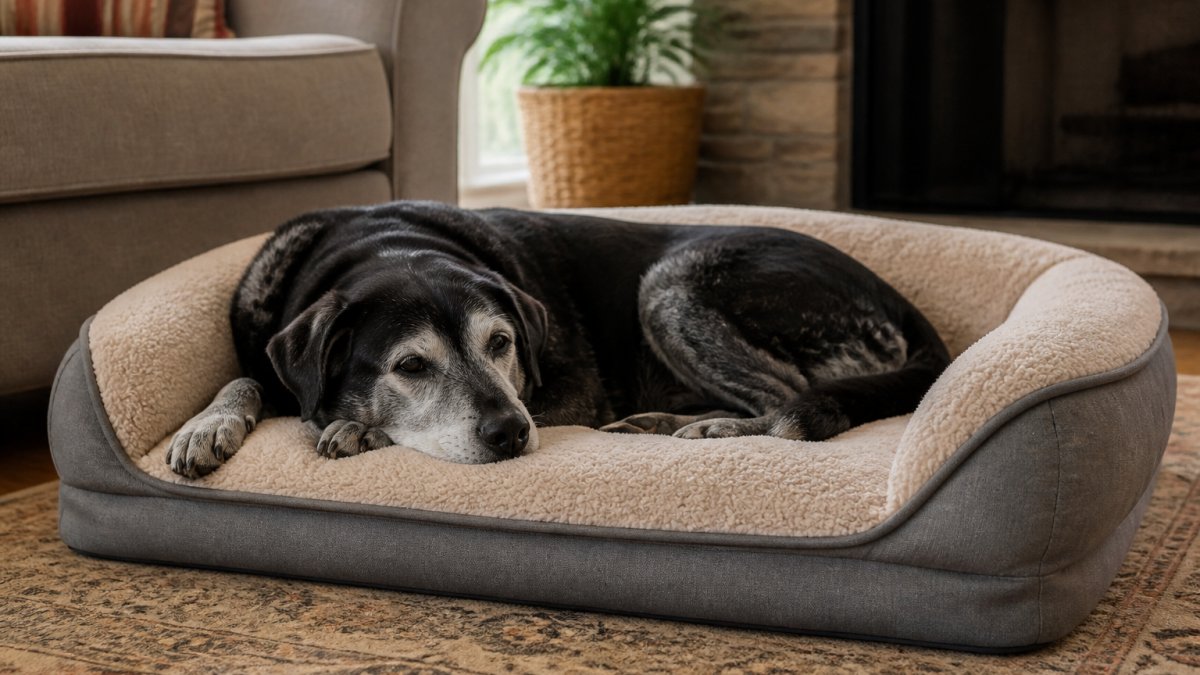
Senior dogs benefit most from washable beds. As dogs age, they often develop incontinence or reduced bladder control, especially during sleep.
Puppies benefit significantly too.
Dogs with heavy shedding or drooling need washable covers to manage fur and saliva.
Dogs with skin conditions or allergies benefit from frequent washing, which reduces allergen and bacteria buildup, supports skin health, and reduces itching.
Large breed dogs, whose weight wears beds down faster, also benefit from the cost savings of washable designs.
Small to medium dogs without these issues may not justify the washable bed premium.
Verdict: Is It Worth the Investment?
A washable dog bed is worth buying if your dog has incontinence, heavy shedding, drooling, or skin sensitivity.
For healthy adult dogs without these issues, a standard bed may be sufficient.
The best washable beds combine quality foam, durable covers, and reinforced seams.
The decision should reflect your dog's health needs, your household's cleaning routine, and your pet-care budget.
Keeping your dog's bed clean doesn't require constant replacement. A quality washable dog bed maintains hygiene while reducing long-term costs.
| Dog Type | Recommended Bed Type | Washing Frequency | Key Benefit |
|---|---|---|---|
| Senior dogs with incontinence | Orthopedic with washable cover | Weekly | Hygiene management + joint support |
| Puppies in housetraining | Standard with removable cover | 2-3x weekly | Frequent cleaning during training phase |
| Heavy shedders | Durable with machine-washable cover | Bi-weekly | Fur and odor control |
| Dogs with skin conditions | Washable cover design | Weekly | Allergen and bacteria reduction |
| Healthy adult dogs | Standard or washable optional | Monthly or less | Flexibility based on preference |
Frequently Asked Questions
Is a washable dog bed worth it if I have a young, healthy dog?
For young, healthy dogs, a washable dog bed offers practical value mainly through hygiene and odor control. The American Kennel Club emphasizes machine-washable covers as important for maintaining freshness. If your dog sheds moderately or occasionally has accidents, the ease of cleaning justifies the investment. However, if your dog is low-shedding and housetrained, the cost difference between washable and standard beds may not be critical. Consider your household's cleaning preferences and your dog's specific needs.
How often should you wash a dog bed to keep it fresh?
Most pet owners should wash a dog bed every 1-2 weeks for regular maintenance. Increase frequency to weekly if your dog sheds heavily, has incontinence issues, or spends significant time outdoors. The American Kennel Club notes particular importance for older dogs with incontinence, requiring more frequent washing. Check the manufacturer's care instructions, as washing frequency depends on the bed's material and construction. Between washes, vacuum the bed and use baking soda to control odors.
What makes a dog bed with removable washable cover better than a fully washable bed?
A dog bed with a removable washable cover offers flexibility and protection. You can wash just the cover frequently while the foam base or insert stays protected, extending the bed's lifespan. This design prevents repeated shrinkage or wear to the entire bed structure. Removable covers also allow you to spot-clean or replace them independently if staining occurs. Forbes Vetted highlights removable, machine-washable mattresses as a practical feature in their tested beds, making this design a smart choice for durability.
Can you put a whole dog bed in the washing machine?
Most dog beds cannot go entirely into a standard washing machine due to size and foam density. Always check the care label first. If the bed has a removable cover, wash only the cover in cold water on a gentle cycle. For beds with attached cushioning, hand-wash the cover or use a large commercial machine. Never machine-wash orthopedic foam, as it can absorb excess water and take days to dry, creating mold risk. Detachable covers are designed for machine washing, making them the safer choice for frequent cleaning.
How long does a washable dog bed last with regular cleaning?
A quality washable dog bed typically lasts 2-4 years with proper care, depending on the dog's size, activity level, and washing frequency. Consumer Reports assessed dog beds for both durability and ease of cleaning, confirming these are separate factors. Orthopedic beds with removable covers tend to last longer because washing only the cover reduces wear on the foam. High-quality materials and construction matter significantly, beds with reinforced stitching and dense cushioning withstand repeated washing better. Regular maintenance, including air-drying and occasional vacuuming, extends the bed's life.


