


Table of Contents
- Why Wrinkles Form During Travel
- The Rolling Method for Wrinkle Prevention
- Bundle Packing Technique for Maximum Protection
- Using Packing Cubes Effectively
- Fabric-Specific Packing Strategies
- Best Portable Steam Iron for Travel Recovery
- Post-Arrival Wrinkle Removal Hacks
- Frequently Asked Questions
Last Updated: September 27, 2026
Why Wrinkles Form During Travel
Learning how to pack clothes to prevent wrinkles starts with understanding that they form when fabric gets compressed and folded under pressure for extended periods. Your clothes sit in a suitcase for hours or days, and the weight of other items presses down on them. Heat and moisture trapped inside luggage make the problem worse. The longer clothes stay compressed, the deeper the creases set in.
Most wrinkles aren't permanent, fabric fibers bend out of shape but aren't damaged. Understanding how to pack clothes to prevent wrinkles requires knowing that different fabrics wrinkle at different rates: natural fibers like cotton and linen wrinkle easily, while synthetics resist creasing better.
The best packing methods depend on your fabric type, luggage space, and trip length. The right strategy means arriving with fresh clothes instead of spending your first hour steaming.
The Rolling Method for Wrinkle Prevention
Rolling is the best technique for packing casual clothes while minimizing creases. You roll items tightly into cylinders instead of folding them into rectangles, which reduces fabric tension and prevents sharp fold lines.
Here's how to roll clothes correctly:
- Lay the garment flat on a clean surface
- Smooth out any existing wrinkles with your hands
- Fold the sleeves inward toward the center
- Roll the item tightly from the bottom up, keeping it snug
- Tuck any loose edges as you roll
- Place rolled items vertically in your suitcase
Rolling works because it avoids the hard fold lines that come from traditional folding. According to Eagle Creek's 2024 travel packing research, rolling is widely cited as the cardinal rule for packing casual clothes to save space and minimize fabric tension that leads to creases.
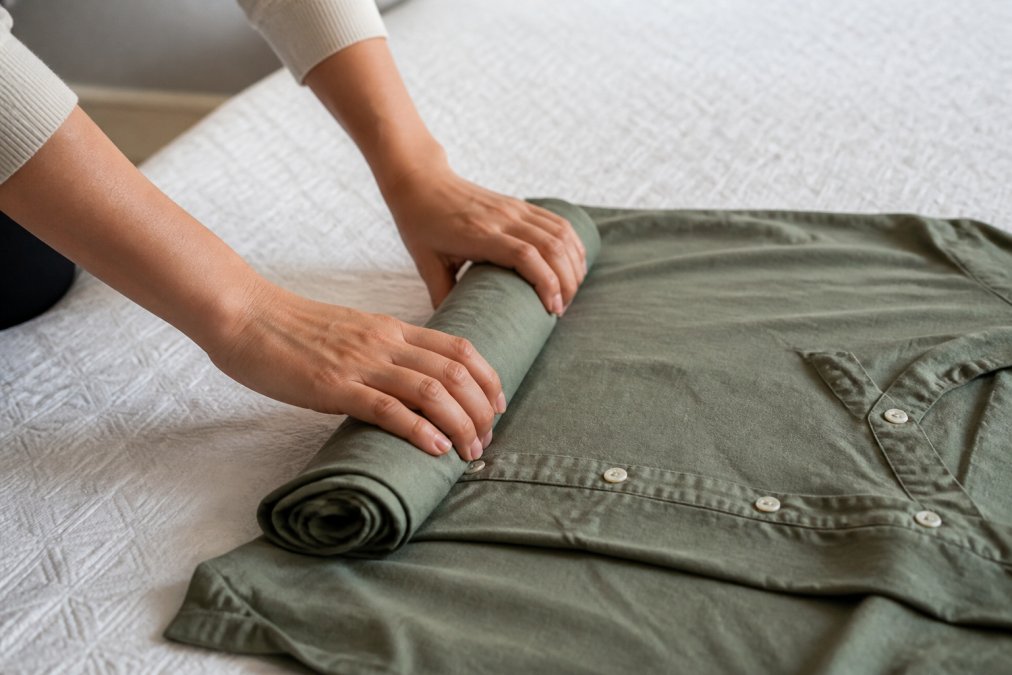
The rolling method works best for:
- T-shirts and casual tops
- Jeans and casual pants
- Lightweight sweaters
- Casual dresses
- Underwear and socks
Avoid rolling delicate items like silk blouses or dress shirts. These need different protection methods.
Bundle Packing Technique for Maximum Protection
Bundle packing wraps items around a central core, creating a compact bundle that protects garments from shifting and pressure. According to NBC News packing method testing, bundle packing has been identified as a highly effective method for maintaining a wrinkle-free wardrobe by wrapping items around a central core.
The bundle method works like this:
- Start with a central item (a rolled sweater or pair of pants)
- Wrap other rolled items around this core
- Keep everything snug and compact
- Place the entire bundle in your suitcase
This prevents clothes from shifting during travel. When items don't move, they don't get new wrinkles, and the central core absorbs pressure protecting outer layers.
Bundle packing is ideal for business trips, longer journeys, rough handling, and dress clothes. Main advantage: clothes stay grouped and protected. Main drawback: you must unpack everything to access one item.
Using Packing Cubes Effectively
Packing cubes are small fabric containers that organize clothes inside your suitcase. They isolate garments and prevent shifting that causes wrinkles during transit. According to SafeBound Moving and Cruise Critic's 2024 packing guide, packing cubes and wardrobe boxes are increasingly used to isolate garments and prevent the shifting that causes wrinkles during transit.
Packing cubes work best when you:
- Sort clothes by type (tops, bottoms, underwear, accessories)
- Roll items before placing them in cubes
- Fill cubes completely so nothing shifts inside
- Place heavier cubes at the bottom of your suitcase
- Keep delicate items in separate cubes from heavier garments
Use larger cubes for everyday clothes and smaller ones for accessories. Compartmentalization keeps clothes organized and protected.
Benefits of packing cubes:
- Clothes stay separated and organized
- Reduced movement during travel
- Easy to find items without unpacking everything
- Reusable across multiple trips
- Fits in most luggage sizes
Packing cubes work well with both rolling and bundle methods. Roll your items first, then place them in cubes for extra protection.
Fabric-Specific Packing Strategies
Different fabrics wrinkle at different rates because of how their fibers absorb moisture and respond to pressure. Understanding your fabric type helps you choose the best packing method and set realistic expectations for wrinkle resistance during travel.
Natural fibers: Cotton, linen, and wool
Natural fibers are highly absorbent and wrinkle easily because moisture penetrates the fiber structure. Linen wrinkles fastest, cotton moderately, and wool resists wrinkles better due to lanolin's water resistance.
Packing strategy: Roll cotton and linen loosely for air circulation. Use gentle bundle packing for wool sweaters. Place tissue paper between linen layers to reduce friction. Keep natural fibers separated from heavier garments and away from suitcase weight. Consider adding a silica gel packet to reduce humidity.
Portable Door Lock Solid Heavy Duty →
Synthetic fabrics: Polyester, nylon, and acrylic
Synthetic fibers are water-resistant with built-in elasticity. Polyester is most wrinkle-resistant because it doesn't absorb moisture. Nylon and acrylic also resist wrinkles but can crease if compressed over 48 hours.
Packing strategy: Synthetics tolerate tight packing and aggressive compression. Bundle packing works well since compression won't lock in wrinkles. They can be packed alongside heavier items safely.
Delicate fabrics: Silk, satin, and lace
Delicate fabrics wrinkle easily but often temporarily. However, they're prone to snagging and permanent friction damage. Silk fibers are fragile, aggressive rolling can cause permanent shine marks.
Packing strategy: Fold delicate items gently along natural seams in a dedicated cube away from heavier items. Use tissue paper between folds to reduce friction. Keep away from zippers and rough seams. Avoid compression, delicate fabrics need breathing room.
Stretch fabrics: Spandex blends and elastic materials
Spandex and elastic fibers can fatigue and lose elasticity under excessive compression. Spandex blends develop permanent wrinkles if compressed too tightly.
Packing strategy: Roll spandex blends gently or fold loosely. Avoid heavy items on top.
Quick fabric reference guide:
| Fabric Type | Wrinkle Resistance | Best Packing Method | Key Consideration |
|---|---|---|---|
| Cotton | Moderate | Rolling (loose) | Absorbs moisture; separate from heavy items |
| Linen | Low | Rolling (loose) with tissue | Most wrinkle-prone; needs air circulation |
| Wool | Moderate-High | Gentle fold or loose bundle | Resists wrinkles; keep dry |
| Polyester | High | Rolling or tight packing | Wrinkle-resistant; tolerates compression |
| Nylon | High | Rolling or bundle | Resists wrinkles; avoid 48+ hour compression |
| Silk | Low | Gentle fold with tissue | Fragile; separate from heavy items |
| Satin | Low | Gentle fold with tissue | Prone to shine marks; minimize friction |
| Spandex blend | Moderate | Loose rolling | Avoid heavy compression; place on top |
Mixing fabrics in one packing cube:
Best Portable Steam Iron for Travel Recovery
Even with perfect packing, some wrinkles happen. A portable steam iron lets you freshen clothes quickly at your destination without waiting for hotel laundry services. When selecting a travel iron, prioritize models with dual temperature settings so you can adjust heat for different fabrics.
Key features to prioritize in a travel iron:
- Lightweight construction: Under 1 pound for easy packing and handling
- Dual or variable temperature settings: Essential for switching between fabric types without damage
- Steam spray function: Delivers targeted moisture to stubborn creases without soaking fabric
- Water tank capacity: Minimum 50 mL allows 5-10 minutes of continuous steaming
- Quick heat-up time: Under 30 seconds means you're ready to press immediately
- Compact or foldable design: Fits in carry-on luggage or a small corner of your suitcase
- Auto-shutoff safety feature: Prevents accidents if you forget to turn it off
Travel irons work best for:
- Touch-ups on arrival day before meetings or events
- Quick fixes on specific problem areas (collars, cuffs, front panels)
- Refreshing clothes between wearings during multi-day trips
- Removing wrinkles from delicate fabrics that shouldn't go in a dryer
tip
Post-Arrival Wrinkle Removal Hacks
Wrinkles that survive your packing method can be removed quickly at your destination. You don't need to find a laundry service or spend hours steaming clothes.
Quick wrinkle fixes:
- Bathroom steam: 10-15 minutes, free
- Damp cloth: 5-10 minutes, minimal effort
- Travel iron: 5-20 minutes depending on garment size
- Hair straightener: 2-5 minutes for small areas
Frequently Asked Questions
Is it better to roll or fold clothes to prevent wrinkles?
Rolling is superior for most casual wear because it minimizes fabric tension that creates creases. Rolling wraps items around a central core, reducing fold lines and the sharp creases that develop when clothes are stacked flat. Folding works better only for structured items like blazers. For travel, rolling should be your default method to pack clothes and prevent wrinkles, especially for shirts, pants, and lightweight layers.
Does using packing cubes actually prevent wrinkles?
Yes, packing cubes isolate garments and prevent the shifting that causes wrinkles during transit. When clothes move around inside your luggage, friction and pressure create new creases. Cubes keep each item stationary and organized. For maximum effectiveness, roll your clothes first, then place them in cubes. This combination of rolling and cube containment significantly reduces wrinkle formation compared to loose packing.
What fabrics are most resistant to wrinkles when traveling?
Synthetic fabrics like polyester, nylon, and spandex blends resist wrinkles far better than natural fibers. Cotton and linen wrinkle easily and require careful packing. Wool has moderate wrinkle resistance. Look for travel-friendly clothing made from synthetic blends or wrinkle-resistant treatments. These materials maintain their shape under the compression and pressure of luggage, reducing the need for post-arrival touch-ups.
How do I remove wrinkles from clothes when I arrive at my destination?
Hang wrinkled items in a steamy bathroom, or use a portable steam iron for quick touch-ups. A portable steam iron with dual temperature settings works on most fabrics and fits easily in carry-on luggage. For stubborn creases, lightly mist the garment with water and hang it to air dry. These post-arrival wrinkle removal hacks save time and keep your clothes looking sharp without access to a full-size iron.


