


Table of Contents
- What Dual Voltage Means and Why It Matters for Travel
- Travel Plug Adapter vs Voltage Converter: Which Do You Need?
- How to Use a Dual Voltage Appliance Safely Abroad
- Travel Appliance Voltage Compatibility: What to Check Before You Buy
- Dual Voltage Travel Iron: Compact Convenience Without Compromise
- Real-World Benefits: Appliances That Travel Well
- Safety Considerations and Certification Standards
- Frequently Asked Questions
Last Updated: October 4, 2026
What Dual Voltage Means and Why It Matters for Travel
Dual voltage travel appliances are devices designed to work safely with electrical systems in multiple countries. They automatically adjust to different power supplies, eliminating the need for converters in many situations.
The electrical systems around the world vary significantly. Most countries use either 110-120V or 220-240V power supplies. Some appliances are built to handle only one voltage. Others are engineered to work with both, making them invaluable for anyone who travels internationally.
Understanding 110-120V versus 220-240V systems
The difference between these two voltage standards is fundamental. The 110-120V system is used in North America and several other regions. The 220-240V system powers most of Europe, Asia, Africa, and South America.
Using a single-voltage appliance on the wrong system can cause serious damage. A device designed for 110V will overheat and fail if plugged into a 220V outlet. The reverse is also true: a 220V appliance won't function properly on 110V power. This is why understanding your destination's electrical system matters before you pack.
The 50/60Hz frequency factor
Voltage is only half the story. Electrical systems also differ in frequency, measured in hertz (Hz). Most of the world uses either 50Hz or 60Hz alternating current.
The United States operates on 60Hz. Europe, Asia, and Africa typically use 50Hz. This frequency difference affects how appliances perform. A device optimized for 60Hz may run slower or less efficiently on 50Hz power.
Dual-voltage appliances are designed to operate on either 50 or 60Hz, but they may be optimized for one frequency over the other.
Travel Plug Adapter vs Voltage Converter: Which Do You Need?
These two tools serve completely different purposes, and confusing them is a common mistake. A travel plug adapter changes the physical shape of your plug to fit foreign outlets. A voltage converter actually transforms the electrical current to match your device's requirements.
When a plug adapter alone is enough
A plug adapter is sufficient when your appliance is already dual-voltage. Check the label on your device. If it reads "100-240V," you only need an adapter to change the plug shape.
Most modern phone chargers and laptop power supplies are dual-voltage. They're designed to work globally. You'll only need an adapter to physically insert them into the outlet.
Adapters are inexpensive, compact, and take up almost no luggage space. They're the first thing to pack for any trip abroad.
When you need a voltage converter instead
A voltage converter becomes necessary when your appliance is single-voltage and the destination uses a different electrical system. If your device reads only "120V" and you're traveling to a 220V country, you need a converter.
Converters are bulkier and heavier than adapters. They also generate heat while in use. For high-wattage appliances like hair dryers, converters can be unreliable. The device may still overheat or underperform.
The safest approach is to pack dual-voltage appliances whenever possible. You'll avoid the converter entirely and travel lighter.
How to Use a Dual Voltage Appliance Safely Abroad
Using a dual-voltage appliance correctly requires a few simple steps. Following them ensures your device works properly and stays safe.
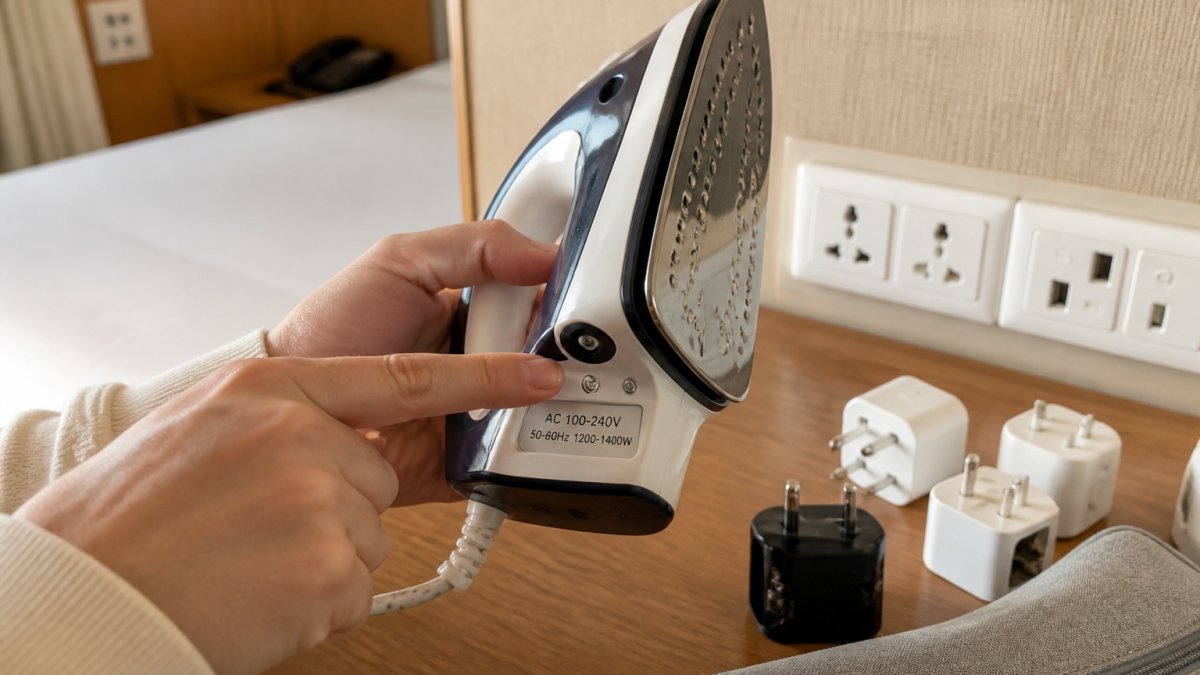
Step 1: Check the voltage label on your device
Locate the label on your appliance. It's usually on the bottom, back, or near the power cord. Look for the input rating. You're searching for voltage information, typically written as "100-240V" or "110-240V."
If you see a single voltage only (like "120V"), the device is not dual-voltage. Do not use it abroad without a converter.
Also note the frequency rating. It will show "50/60Hz" if the device handles both frequencies. This confirms the appliance is truly global-ready.
Step 2: Verify outlet compatibility at your destination
Different countries use different outlet shapes and configurations. Before you travel, research the specific outlet type used in your destination.
Outlet types are labeled A through O. The United States uses Type A (two flat parallel pins). Europe typically uses Type C (two round pins). Asia uses multiple types depending on the country. Knowing your destination's outlet type lets you pack the correct plug adapter.
Many travelers carry a universal adapter that fits multiple outlet types. This single tool works in most countries, eliminating guesswork.
Step 3: Switch the manual voltage selector if present
Some dual-voltage appliances have a physical switch. This switch lets you manually select between 110V and 220V operation. Check your device's manual to locate it.
If your appliance has this switch, set it to match your destination's voltage before plugging in. Failing to do this can damage the device or create a safety hazard.
After switching, plug in the device and test it briefly. Listen for unusual sounds and feel for excessive heat. If anything seems wrong, unplug immediately.
Travel Appliance Voltage Compatibility: What to Check Before You Buy
Buying the right appliance prevents problems overseas. A few key checks ensure you get a device that will actually work where you're going.
Reading the input rating label correctly
The input rating tells you everything. It specifies the voltage and frequency the appliance accepts. Look for a label that shows "Input: 100-240V, 50-60Hz." This is the gold standard for global travel.
Some labels use different formats. You might see "110-240V AC 50/60Hz" or similar variations. All of these mean the same thing: the device works worldwide.
Wattage also appears on the label. This number matters for converter sizing if you ever need one. Higher-wattage devices require heavier-duty converters, which are less practical for travel.
Wattage limits and converter sizing
If you must use a single-voltage high-wattage appliance abroad, converter sizing is critical. A hair dryer typically draws 1000-1800 watts. A converter must handle at least that much power.
Undersized converters overheat and fail. They can also damage your appliance.
Low-wattage devices like phone chargers and electric toothbrushes are converter-friendly. They draw minimal power and work reliably with compact converters. For these items, a converter is a reasonable backup option.
Dual Voltage Travel Iron: Compact Convenience Without Compromise
A dual-voltage travel iron combines portability with real wrinkle-removal power. This is the appliance that justifies the dual-voltage investment for many travelers.
Why a dual voltage travel iron beats single-voltage alternatives
A dual-voltage travel iron works in every country without converters. You pack one lightweight tool instead of juggling adapters and converters. This simplicity alone makes dual-voltage worth the choice.
Single-voltage travel irons force you to choose: leave wrinkled clothes or lug a converter. Neither is appealing. A dual-voltage iron eliminates the trade-off entirely.
The best travel irons are compact and lightweight. They fold for easy packing. Despite their small size, they deliver steam and heat comparable to full-size models. You don't sacrifice performance for portability.
Key features that matter for wrinkle removal on the road
A steam spray function is essential. It adds moisture to fabrics, making wrinkles easier to remove.
Dual temperature settings are valuable. Different fabrics need different heat levels. Delicate materials require lower temperatures. Cotton and linen tolerate higher heat.
A foldable design saves luggage space. Some models have collapsible handles or compact bases. These design choices matter when every inch of luggage counts.
Quick heating time matters too. A travel iron that reaches full temperature in under a minute saves time between meetings.
Real-World Benefits: Appliances That Travel Well
Beyond irons, many appliances benefit from dual-voltage design. Understanding which ones travel best helps you pack smart.
Hair styling tools and personal care devices
Hair dryers, straighteners, and curling irons are the most obvious candidates for dual-voltage design. These high-wattage tools are impractical with converters. A dual-voltage hair dryer is lightweight and genuinely useful.
Electric razors and toothbrushes are excellent dual-voltage choices. They're compact, low-wattage, and work reliably on both voltage systems. Most modern models are already dual-voltage.
Heated hair brushes and styling tools have become increasingly dual-voltage. These devices are popular with business travelers who need polished appearance during trips.
Phone chargers and laptop power supplies
Most modern chargers are already dual-voltage. Check the label on your charger. If it shows 100-240V, you only need a plug adapter. You're already carrying dual-voltage technology.
Laptop power supplies vary. Some are dual-voltage, others are not. Check before you travel. A dual-voltage laptop charger is one less converter to pack.
Portable phone batteries and charging cables are almost universally dual-voltage. These items are designed for global use from the start.
Small household appliances worth packing
Electric kettles can be dual-voltage. These are useful if you travel frequently to countries with different water quality. A familiar kettle gives you control over water temperature and purity.
Small fans and humidifiers exist in dual-voltage versions. For travelers going to climates very different from home, these comfort items can be worthwhile.
Heated blankets and travel pillows rarely need dual-voltage versions, but some do exist. These are luxury items, not essentials, but worth considering for extended trips.
Safety Considerations and Certification Standards
Using appliances safely abroad requires understanding electrical safety. A few key concepts protect you and your devices.
Thermal fuses and circuit breaker protection
Modern appliances include safety devices. A thermal fuse cuts power if the device overheats. A circuit breaker works similarly, protecting against electrical surges.
Never bypass or disable these safety features. They exist to prevent fires and electrical shock. If a device triggers its thermal fuse repeatedly, stop using it.
Dual-voltage appliances are tested and certified for safety at both voltage levels. This testing ensures the thermal fuse and circuit breaker work correctly regardless of the voltage supplied.
Avoiding overheating and electrical failure abroad
Overheating is the most common failure mode for appliances used on wrong voltages. A device designed for 110V will run too hot on 220V. The extra power causes components to fail.
Signs of overheating include:
- Unusual smells or smoke
- Excessive heat on the device body
- Flickering or dimming lights when the device runs
- Automatic shutoff shortly after turning on
If you notice any of these signs, unplug immediately. Do not attempt to use the device again. The damage may not be obvious, but the device is no longer safe.
Frequency mismatches can also cause problems. A motor designed for 60Hz will run slower on 50Hz power. This affects performance but usually doesn't cause immediate failure.
Frequently Asked Questions
What does dual voltage mean on a travel appliance?
Dual voltage means an appliance can operate at both 110-120V and 220-240V, the two main electrical standards worldwide. Most dual voltage devices automatically adjust to the local power system, or have a manual switch you flip. This eliminates the need for a voltage converter in many countries, making travel simpler and your luggage lighter.
Do I need a voltage converter for a dual voltage travel iron?
No. A dual voltage travel iron works directly in any outlet worldwide without a converter. You may need a plug adapter to fit the outlet shape, but the appliance itself handles the voltage difference. A converter is only necessary for single-voltage appliances. Always check your iron's label to confirm it shows 100-240V or dual voltage before plugging in.
How can I tell if a travel appliance is dual voltage?
Look at the input rating label, usually on the bottom or back of the device. If it shows 100-240V or 110-240V, it's dual voltage. Some labels also display 50/60Hz, meaning the appliance handles both frequency standards. If the label shows only 120V or 240V, it's single voltage and requires a converter abroad.
Can I use a dual voltage appliance with just a plug adapter?
Yes, absolutely. A plug adapter changes the physical shape to fit foreign outlets but does not alter voltage. Since dual voltage appliances adjust to any voltage automatically, a plug adapter alone is sufficient. A voltage converter is only needed if your appliance is single voltage. Always verify your device's voltage rating before relying on an adapter alone.
Traveling with the right appliances removes friction from your trips. A dual-voltage travel iron from Lesara's Odds & Ends keeps your professional appearance intact without adding weight to your luggage. With quick heating, dual temperature settings, and a compact foldable design, it's the one tool that actually delivers results abroad. Get started with Lesara's Odds & Ends and pack smarter for every trip.


