


Last Updated: October 22, 2026
Quick Summary
A portable ironing mat for hotel rooms is a foldable, heat-resistant surface that protects furniture while enabling quick garment touch-ups in confined spaces. It typically measures 24 to 32 inches long and weighs under 2 pounds, making it ideal for travel without requiring bulky equipment or hotel laundry services.
- Heat-resistant mats should handle temperatures up to 400°F with padding between 0.25 to 0.5 inches thick for proper insulation.
- Usable ironing area is roughly 2 inches smaller on each side than total mat dimensions due to curled edges and non-slip backing.
- Always use the mat on hard, flat surfaces like desks or sealed wood, never on fabric surfaces or unstable furniture.
- Allow the mat to cool for five minutes before folding to prevent moisture and heat damage during storage.
- Non-slip backing effectiveness varies by surface type, so test your mat on the specific furniture you'll use it on.
Table of Contents
- What Makes a Portable Ironing Mat Essential for Hotel Stays
- Key Features of a Foldable Ironing Mat
- Heat-Resistant Ironing Mat Construction and Materials
- Why Non-Slip Ironing Mat Design Matters in Small Spaces
- How to Use an Ironing Mat on Hotel Room Surfaces
- Storage and Portability: What Sets Compact Designs Apart
- Common Mistakes and Safety Considerations
- Conclusion
- Frequently Asked Questions
What Makes a Portable Ironing Mat Essential for Hotel Stays
Wrinkled clothes can undermine your presentation when traveling for work or leisure. A portable ironing mat for hotel rooms solves this without a full ironing board or hotel laundry services. Unlike traditional boards that demand floor space, a foldable ironing mat works on any flat surface, making it ideal for tight quarters.
Hotel furniture often lacks heat-resistant protection, and placing a hot iron directly on wood, laminate, or upholstered surfaces risks permanent damage and costly replacement fees. A quality portable ironing mat acts as a protective barrier while you handle quick touch-ups between meetings or events.
Travel professionals, apartment dwellers, and anyone managing limited space benefit most: professional-looking results in minutes without the bulk of traditional equipment.
Key Features of a Foldable Ironing Mat
The best foldable ironing mats share core characteristics.
Heat tolerance. A heat-resistant ironing mat should handle temperatures up to 400°F without degrading, warping, or releasing fumes. That ceiling covers the full range of standard household irons, including the highest cotton and linen settings.
Thickness and insulation. Padding in the 0.25 to 0.5 inch range provides better insulation and protects underlying surfaces from heat damage. Thinner mats compress under pressure and offer minimal protection.
Dimensions and usable ironing area. A typical travel mat measures roughly 24 to 32 inches long and 12 to 18 inches wide when open, but the usable ironing area is smaller because the edges curl and the non-slip backing needs full contact.
Use those numbers to match garments to mats:
| Garment | Minimum usable length | Minimum usable width |
|---|---|---|
| Dress shirt sleeve or collar | 12 in | 8 in |
| Dress shirt body | 24 in | 14 in |
| Trousers (folded) | 28 in | 12 in |
| Skirt or dress panel | 30 in | 14 in |
| Blazer front panel | 30 in | 16 in |
Weight and packed size. Look for a portable ironing mat that weighs under 2 pounds and folds to roughly the size of a laptop when stored. Many designs promise compactness but still take up significant luggage space once the padding is rolled or folded.
Surface material. The top layer should be 100% cotton or a cotton-polyester blend with a smooth finish. Cotton provides natural heat distribution and won't melt or off-gas when heated. Synthetic materials often emit odors and can stick to iron soles.
Heat-Resistant Ironing Mat Construction and Materials
Understanding how an ironing mat protects surfaces and handles steam helps you choose the right one. Construction typically involves multiple layers: a top cotton layer for heat distribution, an insulating middle layer (often felt or foam), and a non-slip backing that grips the work surface.
The insulating core. The insulating core is important. A mat that fails mid-trip leaves you with no protection at all.
Steam, moisture, and ventilation. Standard cotton-topped mats are suitable for steam irons, but the steam has to go somewhere. Moisture passes through the cotton top, spreads laterally through the core, and evaporates from the exposed edges. That works only if the mat has open edges and the surface underneath is non-porous.
A few practical rules follow from that:
- Never iron on a surface that can absorb water. A wood desk with an oil finish, an unfinished dresser top, or a padded luggage bench will trap moisture under the mat. Use glass, laminate, or sealed wood.
- Give the mat breathing room. Don't fold the edges under to fit a small desk; you'll seal the ventilation path and trap steam against the furniture.
- Let the mat air out between garments. After a long session, stand the mat on edge or drape it over a chair back for a few minutes so residual moisture escapes before you fold it.
- Watch for dampness underneath. If the furniture feels warm or damp after ironing, the mat's insulation or ventilation is inadequate for your iron's steam output. Stop and switch surfaces.
Non-slip backing materials. The backing should be thick enough to prevent bunching or sliding under downward pressure.
Moisture resistance in the core. A properly constructed mat sheds moisture rather than absorbing it, staying fresh between uses.
Why Non-Slip Ironing Mat Design Matters in Small Spaces
Working in confined spaces demands absolute stability. A non-slip ironing mat prevents accidents when equipment shifts during use. On a narrow hotel desk or small apartment table, even slight movement can cause you to miss your target or knock over the iron.
The non-slip surface also affects technique. When the mat stays anchored, you can apply consistent pressure without worrying about it sliding.
Material choice impacts grip performance. Some non-slip backings work well on smooth surfaces but lose effectiveness on textured finishes. Glass-topped desks, laminate, wood finishes, and painted edges all present different gripping challenges, so test your mat on the specific surface before relying on it for important clothes.
Temperature affects grip too. As you iron, heat radiates downward, and some non-slip materials become more slippery when warm. Mats maintain consistent grip regardless of temperature.
How to Use an Ironing Mat on Hotel Room Surfaces
Setting up your portable ironing mat correctly takes just a few minutes and prevents most common problems.
Place the mat on the flattest, most stable surface available. A desk is ideal; a dresser works well too.
Position the mat so its non-slip backing makes full contact with the furniture surface. Press down gently around the edges to ensure the backing grips securely.
Let your iron heat fully before starting. Place the iron on the mat's surface briefly to test that heat transfers properly. This confirms the mat is working as a protective barrier and helps you gauge the temperature.
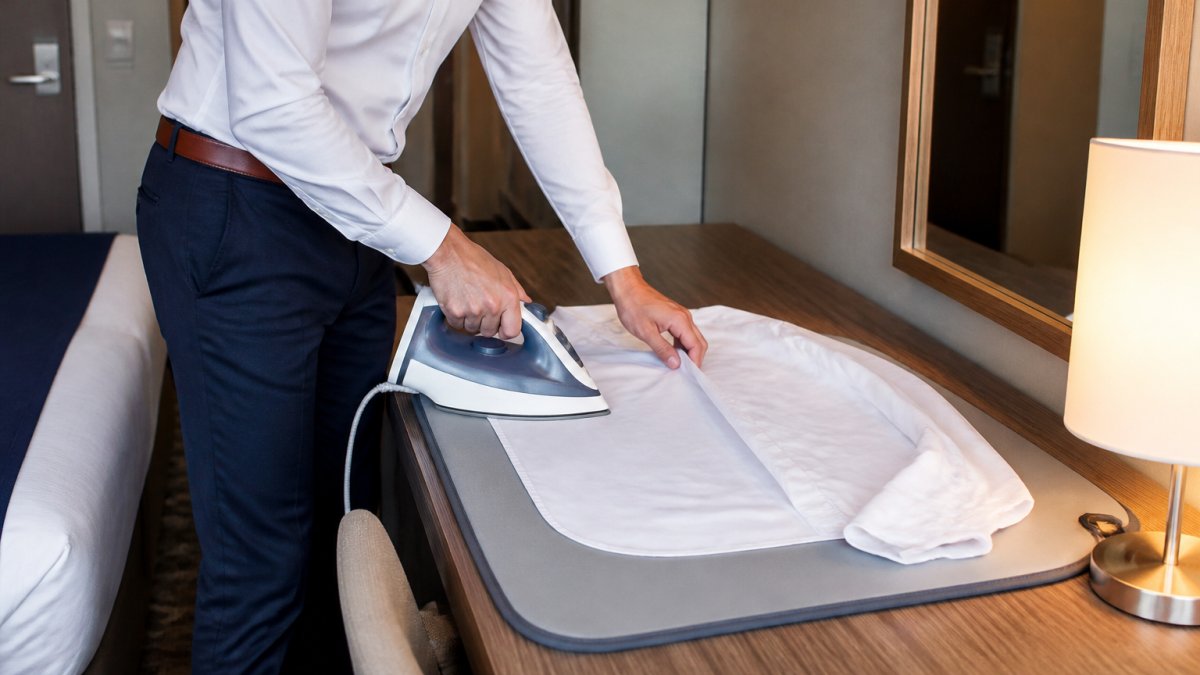
Work methodically across your garment with smooth, controlled strokes. The mat's padding absorbs some heat, so you may need slightly longer contact time than with a traditional board.
Allow the mat to cool slightly before folding it for storage. Folding a still-hot mat can trap moisture and heat inside the folds, potentially damaging the material or creating mildew.
Storage and Portability: What Sets Compact Designs Apart
True portability means the mat doesn't become a burden between uses. A foldable ironing mat should fold into thirds or roll up compactly, roughly the size of a rolled-up towel or small yoga mat, fitting easily into luggage.
Weight matters when you're carrying it. A mat that weighs 3+ pounds becomes noticeable after a few days of travel; lighter designs (1.5-2 pounds) reduce fatigue, especially if you're managing multiple bags.
Some mats hang for storage, using a built-in loop or eyelet. This works well in apartments or dorm rooms where floor and closet space is limited. Hanging storage keeps the mat accessible and prevents it from getting crushed under other items.
Rolling versus folding affects deployment speed. A mat that rolls up stays in roll form: just unroll and place. Folded mats require a few extra seconds to open fully.
Durability in storage is often overlooked. Mats stored in tight spaces can develop creases or permanent folds. Materials that resist creasing maintain their effectiveness longer.
Common Mistakes and Safety Considerations
Most problems with portable ironing mats stem from misuse rather than design flaws. Using the mat on unstable surfaces tops the list: a wobbly desk or uneven table creates safety hazards and prevents proper furniture protection.
Excessive downward pressure damages the padding. The mat is designed to distribute heat, not withstand a full-body lean. Use normal ironing pressure and let the iron's weight do most of the work.
Never use the mat on fabric surfaces, even temporarily. The combination of heat and weight can damage upholstered furniture, bedding, or delicate fabrics. Hard, flat surfaces only.
Moisture management is critical. If your mat gets wet from steam or spills, allow it to dry completely before storing, since damp storage creates mildew and odor problems.
Don't assume all non-slip backings work equally well on all surfaces. Glass-topped furniture, laminate, and wood finishes all behave differently. Test your mat on the actual surface you'll use it on before relying on it for important clothing.
The mat protects furniture from heat damage, but it doesn't make the iron cool. Always place the iron on the mat itself, never on surrounding furniture surfaces.
| Common Mistake | Why It Matters | Prevention |
|---|---|---|
| Using on unstable surfaces | Creates safety hazards and poor results | Test furniture stability first |
| Applying excessive pressure | Damages mat padding and reduces effectiveness | Use normal ironing pressure |
| Placing on fabric surfaces | Damages upholstery and bedding | Use only on hard, flat surfaces |
| Storing while damp | Creates mildew and odor problems | Allow complete air drying before storage |
| Assuming universal grip | Non-slip backing varies by surface type | Test on your specific furniture |
| Overheating the mat | Can damage materials and reduce lifespan | Follow iron temperature guidelines |
Conclusion
A portable ironing mat for hotel rooms delivers practical value. It protects hotel furniture from heat damage, enables quick touch-ups in confined spaces, and eliminates dependence on laundry services or bulky equipment.
Choose a mat that matches your needs: consider travel frequency, the surfaces you'll work on, and available luggage space. A mat that folds compactly, weighs under 2 pounds, and has non-slip backing and thick insulation makes travel easier and protects furniture reliably.
Frequently Asked Questions
Can you use a portable ironing mat on a hotel desk?
Yes, a portable ironing mat is designed specifically for flat surfaces like hotel desks, nightstands, and tables. The mat's heat-resistant base protects the furniture surface from heat damage. Ensure the surface is clean and stable before placing the mat, and verify the mat fits within the desk boundaries. Always check that steam or moisture won't damage the desk finish before ironing.
What should you put under an ironing mat in a hotel room?
Place your portable ironing mat directly on a clean, dry, flat surface such as a desk, table, or bed with a protective layer. The mat's insulated padding already provides heat protection underneath, so you don't need additional materials. Avoid placing the mat on surfaces with finishes that could be damaged by heat or moisture.
Are portable ironing mats heat resistant?
Quality portable ironing mats feature heat-resistant construction with insulated padding designed to withstand iron temperatures. Always verify the mat's heat rating matches your iron's maximum temperature. Check the manufacturer's specifications to confirm the mat can handle continuous heat exposure without degradation.
How do you choose a non-slip ironing mat for travel?
Look for a mat with a non-slip base that grips the surface beneath it, preventing the mat from shifting while you iron. Check for rubberized or textured underside materials that anchor the mat in place. Consider the mat's weight and thickness, heavier mats with adequate padding provide better stability.
A portable ironing mat transforms how you manage wrinkled clothes while traveling. Whether you're in a hotel room, apartment, or dorm, having a protective surface for quick touch-ups keeps you looking polished without the hassle of traditional equipment. The right mat combines durability, portability, and reliable heat protection, making professional-looking results possible anywhere.


