


Table of Contents
- Why a Sensory Play Routine Beats Random Activities
- What You'll Need Before You Start
- Step 1: Map Your Child's Day Around Natural Transitions
- Step 2: Build Easy DIY Sensory Bin Ideas That Rotate Weekly
- Step 3: Set a Sensory Play Schedule for Toddlers That Sticks
- Step 4: Pick the Right Sensory Play Tools for Home
- Step 5: Follow Sensory Play Safety Tips for Every Age
- Troubleshooting Meltdowns and Adjusting for Seasons
- Frequently Asked Questions
Last Updated: September 14, 2026
Why a Sensory Play Routine Beats Random Activities
A sensory play routine is a planned sequence of sensory experiences scheduled at consistent points in a child's day. Research from the National Center for Biotechnology Information systematic review of sensory-based interventions (2025) found strong evidence that sensory input delivered through caregiver education and home-based strategies supports children's development. Structure is what changes outcomes.
The difference between a routine and a pile of activities comes down to predictability. Children process sensory information more efficiently when they know what's coming next.
What You'll Need Before You Start
Before building a sensory play routine, gather four things: a written daily schedule, two or three shallow bins, a set of scooping and pouring tools, and a calm-down space. Nothing here requires specialty equipment.
Occupational therapists recommend activities involving pushing, pulling, kicking, hanging, jumping, and lifting to help organize the nervous system, according to the STAR Institute for Sensory Processing (2024). That means household items work fine.
Your starting checklist:
- One shallow plastic bin per rotation (roughly 28 by 20 centimeters)
- Scoops, cups, tongs, and spoons
- A timer or visual schedule
- A cushion or beanbag for the calm-down corner
- A written note of your child's alert and tired times
Step 1: Map Your Child's Day Around Natural Transitions
Build the routine into transitions you already have, not new time slots. Morning wake-up, after school or nap, and bedtime are the three anchor points where sensory input does the most work. Most practitioners find that anchoring to existing habits is what makes a routine survive past week two, a new time slot competes with everything else in the day, while a transition you already perform happens whether or not you remember the routine.
Before you assign activities, note two things about your child: whether they tend to seek movement or avoid it, and when their energy peaks and crashes. A seeker who craves crashing and spinning needs a different morning plan than an avoider who covers their ears at the blender. Write both observations down; you will use them to sort activities below.
Morning: Alerting Activities to Wake Up the Body
Alerting activities use movement, cool temperatures, and light touch to bring a drowsy child online. The mechanism is straightforward: rapid vestibular and tactile input raises arousal, which is why a cold-water hand wash or a brisk walk before breakfast does more than a rushed morning of verbal prompting.
Ten minutes is enough. Options that work in a normal morning:
- Jumping on a cushion or mini trampoline for two to three minutes
- A brisk walk to the end of the block and back
- Cold-water hand wash or face rinse
- Chewy or crunchy breakfast foods (apple slices, toast) for oral proprioceptive input
- Carrying the laundry basket to the machine
Keep alerting input in the first thirty minutes after waking. Delivered too late, it collides with the afternoon wind-down instead of supporting it.
Afternoon: Heavy Work to Reset After School or Nap
Heavy work is any activity that pushes or pulls against the body's joints and muscles, technically, proprioceptive input. It is the single most reliable reset for a wired or foggy afternoon because deep pressure input tends to organize the nervous system without adding more stimulation. Occupational therapists commonly recommend pushing, pulling, kicking, hanging, jumping, and lifting for exactly this reason.
You do not need a sensory gym. Household heavy work that costs nothing:
- Carrying a full laundry basket from room to room (5 to 10 minutes)
- Pushing a loaded grocery bag or box across the floor
- Wall push-ups or chair push-ups for two minutes
- Pillow crashes onto a mattress or couch cushion
- Wheelbarrow walks (hold the child's ankles, they walk on hands) across the room
- Helping carry groceries in from the car, one bag at a time
- Digging in a garden bed or shoveling snow, season permitting
Aim for ten minutes. The tell that it worked is a calmer, more organized child within about fifteen minutes, not a tired one. If your child escalates instead, the input was too intense; halve the duration next time.
Evening: Calming Techniques Before Bed
Calming input slows the nervous system. Deep pressure, dim lighting, and slow rhythmic movement do more than a bath alone, because the bath's warmth helps but its splashing and toys can be alerting. Keep the last thirty minutes low-stimulation and predictable.
Evening options:
- Deep pressure: a firm bear hug, a weighted lap pad, or rolling a therapy ball slowly over the back
- Slow rocking in a chair or on a glider for five minutes
- Dim lighting and reduced screen brightness
- A predictable sequence: bath, pajamas, two books, lights out, same order every night
- Quiet tactile play with a single filler, such as dry rice in a shallow bin
Avoid alerting input in this window. Jumping, spinning, and loud music belong in the morning or afternoon, not the hour before bed.
Step 2: Build Easy DIY Sensory Bin Ideas That Rotate Weekly
Easy DIY sensory bin ideas work best when you rotate the filler weekly, not the bin itself. One bin, one filler, one set of tools. Swap the contents every seven days to keep novelty high without buying anything new.
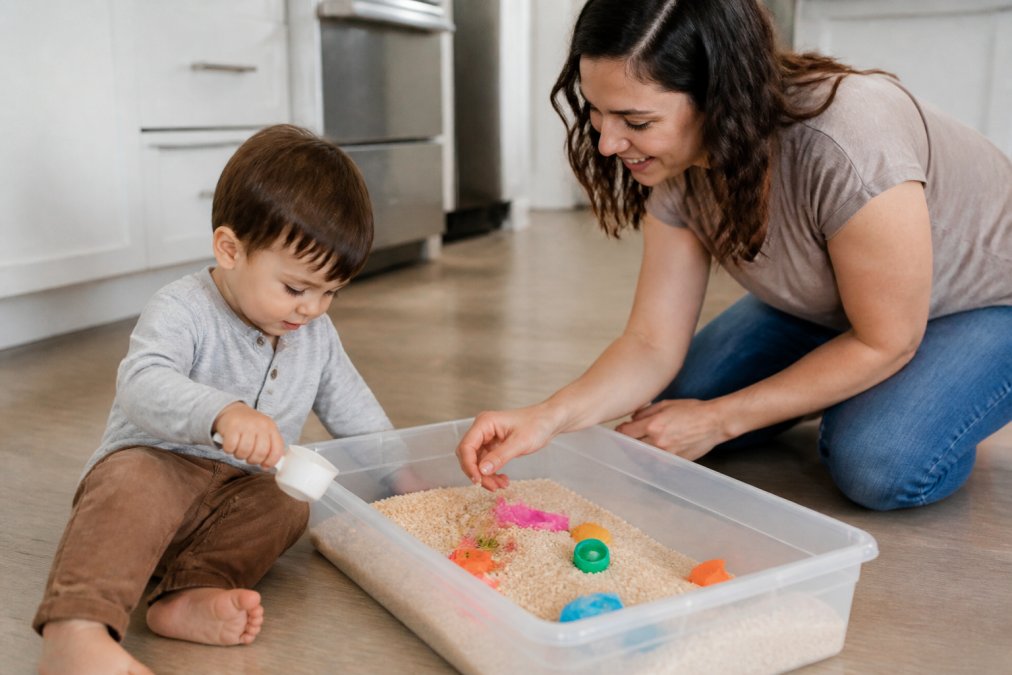
Fillers that hold up well: dry rice, dried beans, kinetic sand, shredded paper, water beads, and cooked spaghetti for tactile play. Add a scented element for olfactory input and a textured scoop for tactile stimulation.
Step 3: Set a Sensory Play Schedule for Toddlers That Sticks
A sensory play schedule for toddlers sticks when it's short, visible, and tied to an existing habit. Three ten-minute sessions beat one thirty-minute block, because toddler attention resets faster than adults expect.
Consistent use of visual schedules or simple checklists is a primary strategy for building predictable daily routines at home, per Autism First (2024). Post the schedule at eye level and let your child move a marker after each session.
| Time of Day | Sensory Focus | Duration | Example Activity |
|---|---|---|---|
| Morning | Alerting | 10 min | Jumping, brisk walk, cool water play |
| Afternoon | Heavy work | 10 min | Carrying, pushing, wall push-ups |
| Evening | Calming | 15 min | Deep pressure, rocking, dim lights |
Step 4: Pick the Right Sensory Play Tools for Home
Sensory play tools for home should match your child's sensory profile, not the trendiest product. A child who seeks movement needs different tools than one who avoids touch.
Start with open-ended items: bins, scoops, balls, and cushions. Add one interactive piece for engagement. The Dancing Cactus Plush Toy Doll Electronic Recording Shake With Song Funny Gift US ($32.59) gives toddlers an alerting audio and visual cue that pairs well with morning sessions. For children who need gross motor movement, a backyard option like the HYPOAI Bounce House Inflatable Bounce Castle with Blower ($374.67) delivers jumping, climbing, and splash play in one setup.


Step 5: Follow Sensory Play Safety Tips for Every Age
Sensory play safety tips change with age, and the biggest risk is choking. Under three years, avoid anything smaller than a toilet paper tube, including water beads, dried beans, and small buttons.
Other rules that matter:
- Supervise water play at all times, even shallow bins
- Check fillers for sharp edges before each session
- Wash hands and bins after every use to prevent illness
- Watch for signs of sensory overload: covering ears, turning away, escalating cries
Stop the activity the moment overload appears. Pushing through it teaches a child that sensory input is something to endure.
Troubleshooting Meltdowns and Adjusting for Seasons
Most sensory play guides stop at the activity list. The part that actually determines whether a routine survives is what you do when it falls apart, and it will fall apart, usually in week two or three, often on a day when you least have the patience for it.
When a Meltdown Happens Mid-Routine
A meltdown during a sensory session usually means one of three things: the sensory load was too high, the warning before a transition was too short, or the child was already dysregulated before the session started. The response is the same in all three cases.
- Reduce input immediately. Turn off music, dim lights, stop the activity. Do not add more sensory input hoping to override the meltdown.
- Lower your own voice and slow your movements. A dysregulated adult escalates a dysregulated child faster than any activity does.
- Move to the calm-down space, not away from it. The cushion or beanbag corner should be a place the child goes to, not a place they are sent to as punishment.
- Offer deep pressure, not conversation. A firm hug, a weighted lap pad, or slow rocking. Reasoning with a child mid-meltdown does not work; the thinking brain is offline.
- Wait it out. Most meltdowns resolve in five to fifteen minutes once input is reduced. Trying to shorten it usually lengthens it.
After it passes, note what happened: time of day, activity, what preceded it. Three or four notes will usually reveal a pattern, a specific filler, a specific time, or a specific transition that consistently triggers overload.
When the Routine Itself Stops Working
A routine that worked in October may stall in January. Common causes and fixes:
- Novelty has worn off. Rotate the filler, not the whole routine. Same bin, same time, new contents.
- The child has outgrown the activity. A toddler who loved dry rice at eighteen months may need scooping challenges or heavier work by age three.
- The timing drifted. If the afternoon session slid from 3:30 to 5:00, it is now competing with dinner and bedtime. Move it back.
- The parent is dysregulated. This is the one most guides skip. If you are running on four hours of sleep, your child will read it. Shorten the session to five minutes rather than skipping it entirely, the consistency matters more than the duration.
Frequently Asked Questions
What are some easy homemade sensory play ideas?
Start with what's already in your kitchen. Dry rice or beans in a shallow bin with scoops and cups covers tactile stimulation and fine motor skills. Edible play dough made from flour, salt, water, and food coloring works for toddlers who still mouth objects. For heavy work, try pushing a laundry basket full of books across the floor. A 2025 NCBI systematic review found strong evidence that sensory input delivered through caregiver education and home-based strategies supports children's development, so simple household materials are enough to build a sensory play routine.
How long should a sensory play session last?
Most children do well with 10 to 20 minutes per session, two or three times a day. Watch for signs of sensory overload such as turning away, covering ears, or getting agitated, and stop there rather than pushing to a set time. A sensory play schedule for toddlers works best when sessions are short and tied to natural transitions like after breakfast or before bath. Consistency matters more than duration, so a predictable 10-minute slot every day beats an hour-long session once a week.
What are the most important sensory play safety tips?
Supervise every session, especially with children under three who mouth objects. Avoid small items that fit through a toilet paper tube, and skip raw beans or uncooked rice for kids who still put things in their mouths, using edible alternatives instead. Check bins for cracks and sharp edges before each use, and keep water play shallow. If your child has a known sensory processing difference or an occupational therapy plan, follow the therapist's guidance on which activities and textures are appropriate.
How do I introduce sensory play to a child who refuses new textures?
Start with dry, low-mess materials like sand or large blocks before moving to wet or sticky textures. Let your child watch you play first, then offer a tool like a scoop so their hands stay clean at first. The STAR Institute for Sensory Processing notes that heavy work activities such as pushing, pulling, and lifting help organize the nervous system, so a movement activity before a texture activity can make the new material easier to tolerate. Never force contact, and repeat the same material across several days.
Building a sensory play routine at home takes about two weeks of consistent repetition before it feels natural. Lesara's Odds & Ends carries the interactive toys and home essentials that make those sessions easier to run, with free shipping and hassle-free exchanges if something doesn't fit your child's needs. Add to cart and start with one bin, one schedule, and one calm-down corner.


